Land for Factory Lease in Vietnam - Vinasc Real

Vietnam is emerging as an industrial “promised land” with over 700 industrial parks (IPs) spread across all 63 provinces and cities. From high-tech zones in Bac Ninh and Hung Yen to agricultural and seafood processing parks in the Mekong Delta, each IP offers unique advantages in infrastructure, investment incentives, and workforce availability. This article provides an overview of available land for factory lease, helping you understand the locations, costs, leasing procedures, and how to maximize investment benefits. Let’s explore to find the most ideal industrial park for your project!

General Overview

Vietnam currently has over 700 industrial parks across its 63 provinces and cities, with a total planned area of approximately 106,000 hectares (equivalent to nearly 1,100 km²). Around 70% of this land has been filled, while about 30,000 hectares remain available for lease, including cleared land and areas in subsequent development phases.

  • GDP Contribution: Industrial parks contribute around 30–35% of total industrial output value and more than 70% of total annual committed FDI.
  • Diverse Industries: Ranging from agricultural and seafood processing, textiles, footwear, to electronics, mechanics, automotive, and high technology.
  • Infrastructure Readiness: Many parks are equipped with synchronized systems for electricity, water, wastewater treatment, telecommunications, and internal transportation, ready to serve projects of all sizes.

With Vietnam’s role in the global production shift and open investment policies, factory lease land is becoming a strategic destination for multinational corporations and foreign investors.

Outstanding Competitive Advantages

Integrated Technical Infrastructure

  • Electricity: Power supply capacity up to tens of megawatts per park, with medium–low voltage lines directly connected to the national grid.
  • Water Supply & Wastewater Treatment: Major IPs have clean water supply systems over 5,000 m³/day and equivalent-capacity wastewater treatment stations, meeting Class A discharge standards.
  • Telecommunications: Fiber-optic internet across the park, 4G/5G full coverage, infrastructure for IoT and automation.
  • Internal Transportation: Asphalt roads 12–30 meters wide, overpasses, weigh stations, and separate truck terminals.

Strategically Connected Locations

  • Seaports: Hai Phong, Da Nang, Vung Tau, Cai Mep – Thi Vai reduce shipping costs and transit times.
  • International Airports: Noi Bai, Tan Son Nhat, Cam Ranh, Phu Quoc serve time-sensitive, high-value cargo.
  • Expressways & Railways: North–South Expressway, Hanoi – Hai Phong, HCMC – Long Thanh – Dau Giay; North–South railway and Yen Vien – Cai Lan railway line.

Attractive Investment Incentives

  • Corporate Income Tax (CIT) Exemption and Reduction:
  • 2–4 years of full CIT exemption, followed by 50% reduction for the next 4–9 years.
  • Greater incentives for high-tech and environmentally friendly industries.
    Land Lease Incentives: 2–5 years of exemption depending on the park; longer periods for prioritized industries.
  • One-Stop Administrative Procedure: Streamlined process for investment licensing, construction, operation, and environmental permits.

Abundant Workforce

  • Population within a 50 km radius of major IPs often exceeds 1 million, supported by a network of universities and vocational colleges training engineers and skilled workers.
  • Customized Training Policies: Partnerships between IP management boards and vocational schools for tailored workforce training based on enterprise demand.
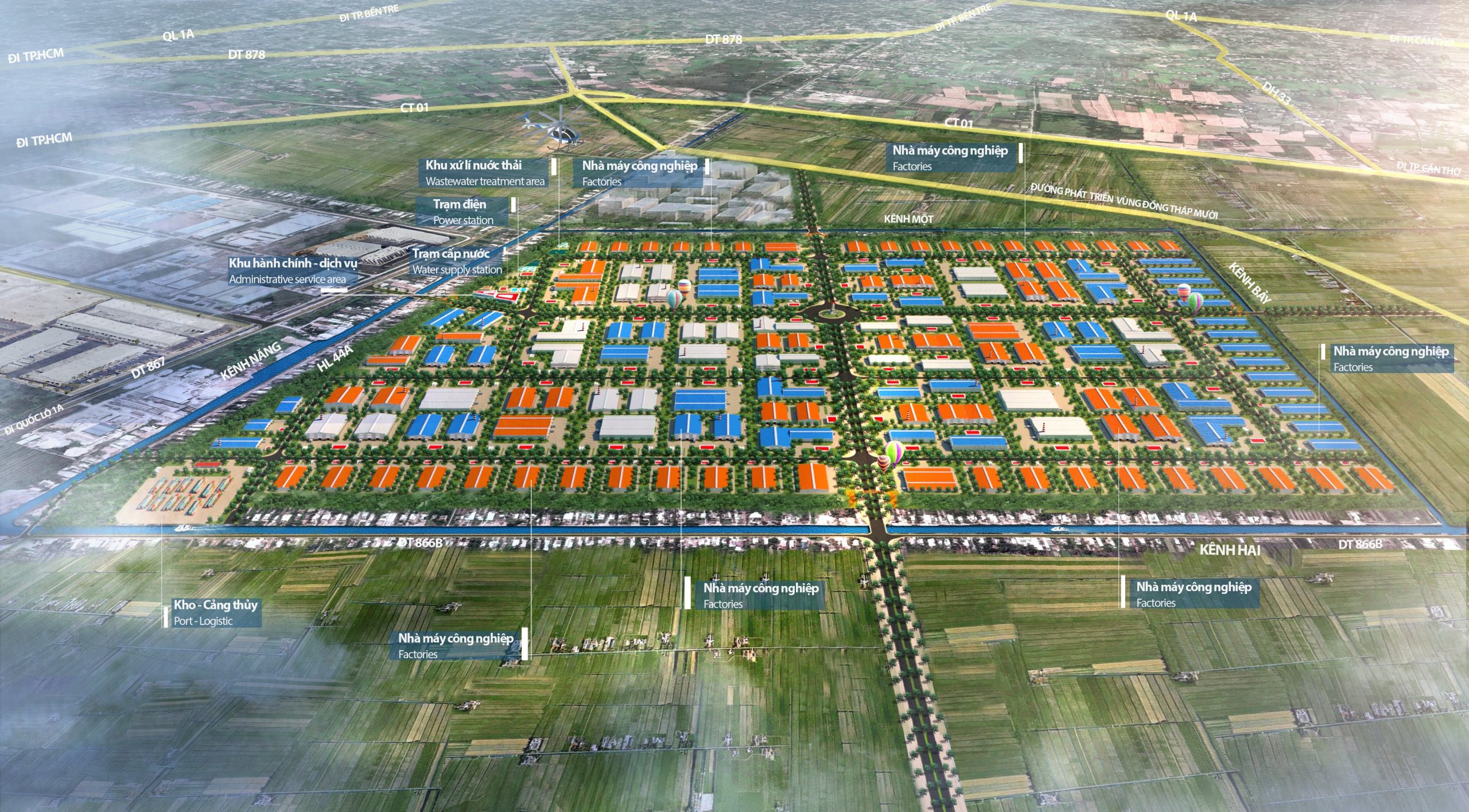
Regional Distribution and Strengths

RegionProvinces/CitiesEstimated No. of Industrial Parks (IPs)Industry Strengths
Southeast RegionBinh Duong, Dong Nai, Ba Ria–Vung Tau, Long An~120Electronics, automotive, mechanical engineering, food processing
Red River DeltaBac Ninh, Hai Duong, Hung Yen, Thai Nguyen~100High-tech, electronic components
North Central RegionThanh Hoa, Nghe An, Ha Tinh~80Steel, metallurgy, building materials
Central CoastDa Nang, Quang Ngai, Binh Dinh~70Petrochemical refining, shipbuilding, textile & wood
Mekong DeltaTien Giang, Can Tho, Hau Giang~60Processed agricultural products, warehousing, logistics
NortheastQuang Ninh, Lang Son, Bac Giang~50Coal, minerals, industrial support services
Central HighlandsGia Lai, Kon Tum~20Pepper, coffee, processed agriculture
Southwest RegionKien Giang, An Giang~25Export seafood, specialty agricultural products
Khu Công Nghiệp Tỉnh Tiền Giang
Land for Factory Lease in Vietnam

Detailed Selection Criteria

Land Lease Process for Project Implementation

Information Collection & Initial Consultation

– Discuss requirements: industry, production capacity, budget, timeline.

– Provide a list of suitable industrial parks with preliminary quotations.

On-site Survey

– Schedule site visits, assess infrastructure conditions, conduct soil quality tests.

– Prepare a pros & cons report comparing at least 3 industrial parks.

Negotiation & Contract Drafting

– Negotiate rental rates, payment terms, duration, and investment incentives.

– Draft the Land Lease Agreement and Memorandum of Understanding (MOU).

Submission of Documents & Investment Licensing

– Prepare documents for Investment Registration Certificate (IRC), Construction Permit, and Environmental Permit.

– Submit to the Industrial Park Management Board or Department of Planning and Investment and follow up on the process.

Land Handover & Construction

– Finalize the handover of “clean land” and sign the handover minutes.

– Commence factory construction, monitor progress and quality.

Completion & Operation

– Install machinery and equipment, convert land use if needed.

– Final acceptance, obtain operating licenses, and begin production.

Khu Công Nghiệp Ở Cao Bằng
Land for Factory Lease in Vietnam

One-Stop Services from Vinascreal

Development Trends & Forecasts

Practical Case Studies

Electronic Component Factory Project in VSIP Bac Ninh (20 ha):

- Survey and negotiation completed in 15 days; IRC granted within 30 days.
- CIT incentives: 4-year exemption, 50% reduction for the following 6 years.

Steel Bone Structure Project in Nghi Son IP, Thanh Hoa (50 ha):

- Supported in obtaining environmental permits; factory built to EU standards.
- Connected technical labor force from local vocational schools.

Tips for Investors

- Prepare contingency budget for unforeseen costs (10–15% of total investment)

- Check detailed district/commune land-use planning to avoid clearance issues.

- Verify the IP developer's credibility: reputation, financial strength, handover commitment.

- Work with reputable consulting firms to streamline procedures and optimize costs.

Conclusion & Contact

Investing in land for factory lease in Vietnam is not only a strategic move to capture the global manufacturing shift but also a long-term cost-optimization plan with easy market access and attractive investment incentives.

Vinascreal – with over 10 years of experience in industrial real estate consulting and brokerage – is committed to supporting you throughout the process from site survey and negotiation to legal formalities and post-investment operation.

Contact us today to receive detailed land quotes, updated industrial park maps, and the most optimal investment roadmap for your project!

Why choose Vinascreal?

  • Vietnam IP expertise: Over 5 years of consulting experience, in-depth knowledge of 200+ projects across 30 provinces, and up-to-date policy insights.
  • Extensive partner network: Strategic partnerships with IP Management Boards and major developers like VSIP, Becamex, Amata.
  • End-to-end service: From site survey, legal and financial due diligence, lease negotiation to investment licensing and operational support.
  • Results commitment: Transparent reports, clear timelines, honest consulting, and dedicated support through project launch and operation.