


LIST OF INDUSTRIAL ZONES IN VIETNAM
Strategic Guide for FDI Investors – Updated by Region and 34 Key Provinces, Featuring the List of Industrial Zones in Vietnam
Vietnam currently has over 400 operational industrial parks and hundreds of newly planned projects, creating an industrial ecosystem spanning all three regions. Industrial parks in Vietnam play a central role in the strategy to attract FDI, especially as global capital flows continue to shift towards the China+1 trend and the demand for manufacturing expansion in Southeast Asia is increasing sharply.
The three major industrial regions – North, Central, and South – each possess unique advantages. The North leads in electronics, high technology, and supply chain integration; the Central region has large land reserves, competitive costs, and increasingly infrastructure; and the South is the strongest manufacturing and logistics center with a dense supporting ecosystem. Furthermore, the development of eco-industrial parks, smart IP, and industrial-logistics-urban models demonstrates new trends shaping the future of Vietnam’s industry.
To choose the right location, investors need to carefully consider infrastructure, logistics, human resources, costs, legal aspects, and industry suitability . Vinasc Real provides an independent perspective, on-site surveys, and in-depth analysis, helping businesses make optimal decisions across the entire system of industrial parks in Vietnam .
I. Vision for Industrial Investment in Vietnam
Over the past decade, Vietnam has emerged as one of the world’s new manufacturing and export hubs. A combination of political stability , demographic advantages , competitive production costs , and a consistent focus on attracting FDI has made Vietnam a “top priority destination” in the expansion strategies of corporations from the United States, Japan, South Korea, China, Taiwan, and Europe.
The creation of the article “List of Industrial Parks in Vietnam” is not simply a compilation of information, but also serves as a strategic guide for FDI businesses:
- Identify the location suitable for the manufacturing industry.
- Assessing logistics advantages by region
- Understanding the costs, infrastructure, and management quality of industrial parks.
- Understand the benefits, risks, and legal requirements.
- Optimizing the strategy for opening a factory in Vietnam.
This is the core objective that Vinasc Real aims to achieve:
“Not just providing data – but providing practical insights and optimal solutions for international investors.”
1. Vietnam’s position in the global supply chain
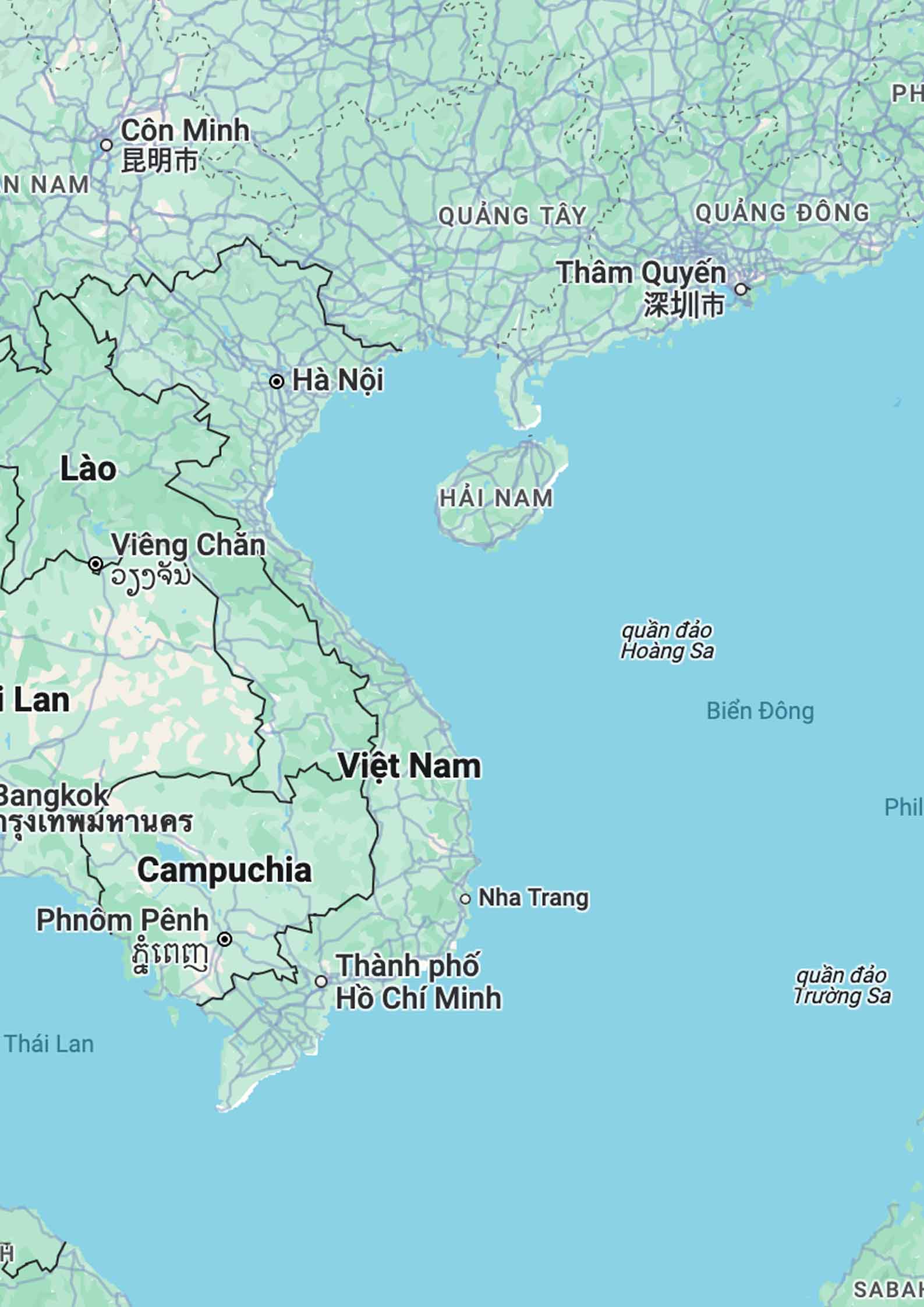
List of industrial zones in Vietnam
1.1 China+1 Trend & Production Relocation Strategy
Since 2018, the wave of factory relocation from China has created significant opportunities for Southeast Asian countries. Vietnam is leading in attracting investment in the following sectors:
- Electronics – Semiconductors
- Telecommunications equipment
- Supporting industries
- Textiles and footwear
- Food processing
- Logistics and supply chain
In particular, many corporations have expanded their scale by tens of billions of dollars: Samsung, LG, Foxconn, Goertek, Intel, Apple Suppliers, Lego, Pandora…
This has fueled a huge demand for industrial land , factories, and logistics parks.
1.2. Benefiting from major Free Trade Agreements (FTAs)
Vietnam currently possesses the widest network of FTAs in the region:
- CPTPP – Opening up the markets of Canada, Mexico, and Japan.
- EVFTA – strong incentives for exports to the EU
- RCEP – a cost-reduction partnership with China, Japan, and South Korea.
- UKVFTA – the UK market
- ASEAN FTA – intra-ASEAN trade
For investors, this means:
- Reduce export taxes.
- Reduce import taxes on raw materials.
- Optimizing supply chain costs
- Potential for international market expansion
In particular, the northern and southern regions have distinct advantages for the electronics and high-tech industries.
2. Vietnam’s core competitive advantages for FDI
2.1 Golden Demographics
- Nearly 100 million people
- 56 million people of working age
- Young, easily trainable workforce.
- Labor costs are 30–40% lower than in China in some industries.
2.2 Stable political and legal environment
Vietnam is ranked among the countries with the most stable political environments in Asia.
This is a top priority for any manufacturing and industrial investor.
2.3 Competitive Costs
- Competitive electricity prices
- Reasonable land lease prices (compared to Malaysia, Thailand, and China)
- Low operating costs
Updated Industrial Land Lease Price List (2024-2025)
| Nation | Reference Price (USD/m²/Lease Cycle) | Comparison with Vietnam (VN) | Comments Update |
| Vietnam (VN) | 137 – 200 | Standard price | Strong growth. Northern Vietnam: Approximately 137–145 USD/m². Southern Vietnam: Approximately 175–200 USD/m². Prices are continuously increasing, especially in tier 1 areas (Hanoi, Ho Chi Minh City and surrounding areas). |
| Indonesia | 180 – 250 | 15-30% higher than Vietnam | Prices remain high, especially in areas near Jakarta (warehouse/factory rental prices are also high). |
| China | 180 – 280 | 20-40% higher than Vietnam | There is a significant difference between tier 1 coastal (very high) and inland cities. Prices are trending downwards or slightly decreasing in some areas, narrowing the gap with Vietnam. |
| Thailand | 130 – 160 | Vietnam | Rental prices are increasing more slowly, currently nearly equal to or sometimes cheaper than in Southern Vietnam , and slightly higher than in Northern Vietnam. Thailand is more cost-competitive than Vietnam in some segments. |
| Malaysia | 90 – 180 | Lower/Approximate to Vietnam | Significantly lower prices still exist in many areas outside the city center. Flexible rental models and low costs remain key attractions. |
2.4 Rapidly developing industrial park system
Currently, Vietnam has approximately:
- Over 400 industrial parks are currently operating.
- Over 100 industrial parks are currently being planned or developed.
Industrial land reserves continue to expand systematically , and the map of Vietnam’s industrial zones will attract more FDI investors.
3. Types of industrial parks in the list of industrial parks in Vietnam
3.1 Industrial Park (IP)
The most common type, suitable for:
- Electronics
- Wood
- Mechanical
- Textiles
- Processing
3.2 Export Processing Zone (EPZ)
Targeting 100% export businesses: Stronger tax incentives compared to regular IP.
3.3 High-Tech Park (HTP)
Concentrate:
- R&D
- High technology
- Precision electronic products
- Robotics, semiconductors
3.4 Eco Industrial Park – Green Industrial Park
Meets the new ESG standards:
- Energy saving
- Water reuse
- Reduce CO₂ emissions
- Smart wastewater treatment system
4. Challenges and risks investors need to know
To ensure transparency and professionalism, FDI investors should note the following:
4.1 Shortage of highly skilled labor
Specifically:
- Automation
- Electronics
- Robotics
- CNC
- Industrial maintenance
4.2 Land rental prices are rising rapidly.
Period 2020–2024:
- The South is growing at 8–12% per year.
- Northern Vietnam is growing at 6–10% per year.
4.3 Some industrial parks are behind schedule in infrastructure development.
Impact:
- Connect the power
- Wastewater treatment
- Land handover progress
4.4 ESG regulations are becoming increasingly stringent.
Due to standards from:
- EU
- America
- Japan
- Global supply chain
Exporting businesses need to comply with more regulations.
5. The role of this list of industrial parks in Vietnam for FDI investors.
This article contains important information based on Vinasc Real’s expertise and experience to help investors:
- Understanding the Overview of Industrial Parks in Vietnam
- Choose the appropriate province
- Evaluate logistics, cost, and human resource factors.
- Identify risks to avoid.
- Navigate to specific province and industrial park pages.
With the ultimate goal:
Making the right decision about factory location in Vietnam reduces risks, optimizes costs, and increases investment efficiency.
II. List of 34 key provinces/cities
Vietnam has over 400 operational industrial parks, distributed across the three regions of North, Central, and South Vietnam. However, from the perspective of international investors, the choice of location is not based solely on the number of industrial parks, but also on:
- Regional logistics advantages
- Industrial clusters have formed.
- Labor force
- Port, airport, and highway infrastructure
- Local incentive policies and reform pace
- The level of abundance of developing industrial parks vs. already occupied ones.
To help investors visualize the information more easily, Vinasc Real divides the 34 provinces/cities into 3 key economic regions , and also directs users to specific articles by province to provide the most comprehensive information on industrial parks in Vietnam.
1. Northern Vietnam – The center of electronics production and high technology in Vietnam.
The North is currently a strategic hub for electronics, high-tech, component, and supporting industries .
Main advantages:
- Proximity to China → optimized raw material sourcing
- Major seaport and airport system (Hai Phong, Noi Bai)
- Many well-developed industrial parks with good infrastructure dominate the list of industrial parks in Vietnam for FDI investors.
- The electronics industry cluster is extremely strong in Bac Ninh, Thai Nguyen, and Hai Phong.
- Attracting significant FDI from companies such as Samsung, Foxconn, LG, Luxshare, and Goertek…
Below are 15 key provinces and cities in Northern Vietnam:
1.1. Hanoi City — Center for administration, R&D services, and high technology.
👉 View the list of industrial zones in Hanoi.
1.2. Bac Ninh — “The electronics industry capital” of Northern Vietnam
👉 View the list of industrial zones in Bac Ninh province.
1.3. Hai Phong City — International Seaport & High-Tech Center
👉 View the list of industrial zones in Hai Phong City.
1.4. Quang Ninh — a trade gateway with China
👉 View the list of industrial zones in Quang Ninh province.
1.5. Hung Yen — an important industrial satellite bordering Hanoi
👉 View the list of industrial parks in Hung Yen province.
1.6. Thai Nguyen — Samsung’s production hub
👉 View the list of industrial zones in Thai Nguyen province.
1.7. Vinh Phuc — a center for automobile and motorcycle manufacturing.
👉 View the list of industrial zones in Ninh Binh province.
1.8. Phu Tho — a new growth area for industrial parks.
👉 View the list of industrial zones in Phu Tho province.
1.9. Lang Son — an important border trade logistics center
👉 View the list of industrial zones in Lang Son province.
1.10. Son La — Potential for developing agricultural and energy industrial parks.
👉 View the list of industrial zones in Son La province.
1.11. Dien Bien — Developing medium-scale supporting industries
👉 View the list of industrial zones in Dien Bien province.
1.12. Tuyen Quang — low land rental prices, suitable for light industry.
👉 View the list of industrial zones in Tuyen Quang province.
1.13. Cao Bang — Towards Border Industry
👉 View the list of industrial zones in Cao Bang province.
1.14. Lai Chau — young workforce, low labor costs
👉 View the list of industrial zones in Lai Chau province.
1.15. Lao Cai — a center for logistics, minerals, and border trade.
👉 View the list of industrial zones in Lao Cai province.
2. Central Vietnam – A new industrial zone with large land reserves and competitive costs.
Central Vietnam is considered an “emerging” region of Vietnam’s industrial sector, especially after significant investment in infrastructure such as the North-South expressway, Chu Lai airport, and Dung Quat seaport.
Main advantages:
- Ample land availability, lower rental costs compared to the North and South.
- International seaports: Da Nang, Chan May, Dung Quat, Quy Nhon
- Suitable for the textile, footwear, wood processing, agricultural products, and components industries.
- Many new industrial parks still have significant potential for growth, contributing to the diversity of industrial park listings in Vietnam.
Here are 11 key provinces/cities in Central Vietnam:
2.1. Thanh Hoa — the industrial growth hub of North Central Vietnam
👉 View the list of industrial zones in Thanh Hoa province.
2.2. Nghe An — the gateway to North Central Vietnam, FDI is increasing sharply.
👉 View the list of industrial zones in Nghe An province.
2.3. Ha Tinh — a center of heavy industry (Formosa Ha Tinh)
👉 View the list of industrial zones in Ha Tinh province.
2.4. Quang Tri — a strategic link between Thailand, Laos, and Vietnam (EWEC)
👉 View the list of industrial zones in Quang Tri province.
2.5. Hue City — Light Industry & Logistics Services
👉 View the list of industrial zones in Hue City.
2.6. Da Nang City — a center for IT and high technology.
👉 View the list of industrial zones in Da Nang City.
2.7. Quang Ngai — Dung Quat Economic Zone is the strongest in Central Vietnam.
👉 View the list of industrial zones in Quang Ngai province.
2.8. Gia Lai — low costs, abundant labor, suitable for the agricultural sector.
👉 View the list of industrial zones in Gia Lai province.
2.9. Dak Lak — the high-tech agricultural center of the Central Highlands
👉 View the list of industrial zones in Dak Lak province.
2.10. Khanh Hoa — International Seaport & Industrial and Service Center
👉 View the list of industrial zones in Khanh Hoa province.
2.11. Lam Dong — Agriculture & Food Industry
👉 View the list of industrial zones in Lam Dong province.
3. Southern Vietnam – The key manufacturing hub and strongest logistics ecosystem in Vietnam.
The South remains the leading region in terms of both the number and quality of industrial parks in Vietnam , especially in Ho Chi Minh City and Dong Nai.
Main advantages:
- Near Cat Lai Port, Cai Mep – Thi Vai
- A large and skilled workforce.
- Vietnam’s strongest supply chain
- The industrial parks are professionally operated and have complete infrastructure.
- The South is the region with the most complete industrial ecosystem and plays a central role in the list of industrial zones in Vietnam , especially in logistics and supporting industries.
Here are 8 provinces/cities from the list of 34:
3.1. Ho Chi Minh City — the national hub of commerce and logistics
👉 View the list of industrial zones in Ho Chi Minh City.
3.2. Dong Nai — one of the three industrial pillars of Southern Vietnam
👉 View the list of industrial zones in Dong Nai province.
3.3. Tay Ninh — a border industrial center bordering Cambodia
👉 View the list of industrial zones in Tay Ninh province.
3.4. Dong Thap — Light industry, processing and agricultural exports
👉 View the list of industrial zones in Dong Thap province.
3.5. An Giang — Processing Industry & Waterway Logistics
👉 View the list of industrial zones in An Giang province.
3.6. Vinh Long — Advantages of stable and low-cost labor
👉 View the list of industrial zones in Vinh Long province.
3.7. Can Tho City — the industrial and seaport center of the Western region.
👉 View the list of industrial zones in Can Tho City.
3.8. Ca Mau — Food Processing and Energy Industry
👉 View the list of industrial zones in Ca Mau province.
III. 8 factors that determine the selection of industrial parks from the list of industrial parks in Vietnam by FDI investors.
Choosing the right industrial park from the outset can determine 60–70% of the success of an FDI project in Vietnam. A wrong decision can lead to:
- Increased logistics costs
- Labor shortage
- Electricity and water shortages
- Environmental risks
- Construction is behind schedule.
- Operating costs exceeded the budget.
Therefore, Vinasc Real analyzes eight key factors that any international investor needs to carefully evaluate before choosing an industrial park.
1. Infrastructure and Logistics Location – The Backbone of Every FDI Project
Without good infrastructure, the factory cannot operate efficiently. Investors should evaluate based on the following key criteria:
1.1. Distance to international seaports
Prioritize:
- Hai Phong (Lach Huyen) → Northern Vietnam
- Da Nang, Dung Quat, Chan May → Central Vietnam
- Cat Lai, Cai Mep – Thi Vai → Southern Vietnam
The golden rule of logistics:
Each kilometer closer to a seaport significantly reduces shipping costs over the next 5–10 years.
For example:
- Industrial parks within a 25 km radius of Hai Phong Port have a significant advantage in the electronics and mechanical supply chain.
- Industrial zones near Cai Mep – Thi Vai are prioritized for exports to the US and EU.
1.2. Distance to the international airport
Especially important for:
- High-tech industry
- Electronic components
- Perishable goods
- High-value goods
Key airport:
- Noi Bai (Hanoi)
- Da Nang
- Tan Son Nhat Airport (Ho Chi Minh City)
- Long Thanh
1.3. Connection to expressways and national highways
Industrial parks need:
- Located less than 5–10 km from the highway entrance.
- No container traffic congestion during peak hours.
- There are internal roads with a load capacity of 30-40 tons.
Highways have a strong impact on FDI:
- Hanoi – Hai Phong
- Hanoi – Lao Cai
- North-South (new route)
- Long Thanh – Dau Giay
- Ben Luc – Long Thanh
1.4. Internal infrastructure of the industrial park
When conducting field surveys based on a list of industrial zones in Vietnam, Vinasc Real assessed 7 factors:
- Has the ground been treated or not?
- Are there enough internal roads to accommodate 2–4 lanes for container trucks?
- Is there a separate drainage system for rainwater and wastewater?
- Is the telecommunications system stable?
- Does the actual land handover schedule match the commitment?
- Is a clean water treatment plant available?
- Is the power source from the national grid or a private substation?
→ These are issues that FDI investors often fail to assess carefully and are therefore more likely to encounter risks.
In fact, when providing information and advice to FDI investors in Vietnam, Vinasc Real thoroughly researches their needs, the specifics of their production and business processes, products, and markets to provide appropriate guidance and minimize negative impacts from infrastructure and logistics.
2. Internal Amenities and Service Provision Capacity – Industrial Park Operating License
A good industrial park is not just about land; it must also have comprehensive operational support services.
2.1. Power supply capacity
FDI investors will be interested in:
- Initial power
- Power expansion
- Stability
- Is there a backup system?
For example, many industrial zones in the North have to cut off electricity during the hot season if they don’t have a backup power system.
2.2. Clean water supply capacity
Criteria:
- Minimum capacity: 10,000–20,000 m³/day
- There is a backup pumping station.
- Water pipes lead to each plot of land.
2.3. Wastewater treatment system meets standards.
This is the most demanding requirement for FDI.
- Processing capacity
- Separate system for rainwater and wastewater.
- Meets EU ESG Category A standards.
Note: Many industrial parks risk being fined for not meeting standards, leading to risks for businesses leasing land.
2.4. Prefabricated factory buildings
Trends among new businesses:
- Rent existing factory/warehouse space.
- Area: 1,000–10,000 m²
- Helps to shorten the time:
- Please give permission
- Build
- Acceptance testing
→ Save 6–12 months compared to building a new factory.
2.5. Support services in industrial parks
A good industrial park should have:
- Logistics
- Protect
- Workers’ dormitory
- Legal services
- Fire protection and prevention
- Supermarket – Convenience Store
We – Vinasc Real – not only provide consulting services but also have a network of related units and contractors to serve and meet the needs of investors who choose us. Our companies and accompanying services are always ready to serve in most industrial parks in Vietnam.
3. Rental costs, operating costs & hidden costs
FDI investors should not only look at the land lease price per square meter, but also at the total lifecycle cost of the project.
3.1. Industrial land lease prices
General trend:
- Southern region: highest
- Northern region: average – high
- Central Vietnam: the most competitive
Choosing the wrong location can cause costs to increase by 20–30% in just 5 years.
3.2. Factory/Warehouse Rental Prices
Prefabricated factory buildings are becoming increasingly popular, and prices vary:
- Quality
- Ground elevation
- Location
- Fire safety standards
3.3. Industrial Park Management Fees
Some places charge $0.3 USD/m²/year, others charge $1 USD — a huge difference.
3.4. Logistics costs
- Close to the port → Low cost
- Far from port → costs increase by 5–20%
3.5. Labor costs
Regions with minimum wage levels:
- Region I: Ho Chi Minh City, Hanoi
- Zone II: surrounding area
- Regions III–IV: more remote provinces
FDI needs to be calculated accurately by region.
3.6. Hidden Costs
For example:
- Water pumping fee
- Wastewater treatment fees exceed the limit.
- Electricity costs increase during peak hours.
- Cost of expanding capacity
Only a real-world survey will reveal the truth.
4. Investment incentive policies – A golden advantage for FDI enterprises in Vietnam
Incentive policies have a strong impact on the factory’s profitability.
4.1. Corporate Income Tax (CIT)
Popular offers:
- Exempt for 4 years
- 50% discount for the next 9 years
Higher incentives (for disadvantaged areas and priority sectors):
- Exempt for 4 years
- 50% reduction over the next 13 years.
- A tax rate of 10% for 15 years.
4.2. Import Tax
- Machinery used to create fixed assets is exempt from tax.
- Exemption from tax on raw materials not yet produced.
4.3. Value Added Tax – VAT
- Tax refund on exports
- Incentives for large-scale business investments.
4.4. Industry-specific incentives
For example:
- Electronics – High Technology
- R&D
- Precision engineering
- Renewable energy
Vietnam has been pursuing a policy of attracting long-term foreign direct investment (FDI). Therefore, preferential policies regarding taxes, land lease fees, or the gradual reduction of administrative procedures to lower compliance costs are practical steps that have become evident over time.
5. Human resources – The soul of all production and business activities.
Generally, not only in Vietnam but also in other countries that attract manufacturing industries, there is a relative imbalance between urban and rural areas. This leads to labor shortages in industrial zones in the provinces, especially for skilled workers.
However, according to recent statistics and surveys by Vinasc Real, Vietnam has rapidly developed its transportation infrastructure and experienced a positive shift of labor from urban to rural areas to reduce urban population pressure and promote balanced development in provinces and remote regions.
FDI needs to be evaluated:
5.1. Labor force size in each region
- Northern Vietnam: Abundant young workforce
- Central Vietnam: low cost, stable
- Southern Vietnam: highly experienced, skilled
5.2. Recruitment of skilled workers
Especially important for:
- Electronics
- Automation
- Robotics
- CNC
- Software
5.3. Presence of universities and technical colleges
For example:
- Ho Chi Minh City University of Technology
- Hanoi University of Science and Technology
- Industrial University
→ Providing highly skilled labor for FDI.
6. Legal framework and investment procedures according to the list of industrial zones in Vietnam.
Typically, FDI investors will be interested in:
6.1. IRC – ERC Application Process
Main steps:
- Request for Investment Registration Certificate (IRC)
- Requesting an Enterprise Registration Certificate (ERC)
- Open an investment account.
- Contribute capital on time.
- Request specialized licenses
6.2. The “one-stop shop” mechanism at the Industrial Park Management Board
Strong localities:
- Hai Phong
- Bac Ninh
- Quang Ninh
- Dong Nai
→ Processing applications 20–40% faster.
6.3. Land legal regulations
- Lease for 50 years
- Land sublease contract from the industrial park developer.
- Legal guarantees regarding land use rights and financial obligations.
7. Risks to consider when choosing an industrial park – Transparency is an extremely important factor.
Key points to note for FDI:
- The developer is behind schedule in infrastructure development.
- Electricity and water supply are not guaranteed.
- The wastewater treatment system is weak.
- Industrial parks are 85% occupied → prices are rising sharply.
- Environmental risks → impact on international certification
- Industrial zones located far from the highway increase logistics costs.
These are the risks that Vinasc Real regularly warns its customers about.
8. New trends influencing industrial park selection strategies
New trend:
8.1. ESG – Mandatory for Exporting Businesses
- Emission standards
- Renewable energy
- Reduce CO₂ emissions
- Adherence to green supply chain
8.2. Eco Industrial Park
Typical industrial parks include: VSIP, Deep C, Amata, Nam Cau Kien…
8.3. Smart Industrial Parks
Application:
- IoT
- Smart Monitoring
- Beast Twin
- Early warning system
8.4. Logistics Park combining industrial park, urban area, and services.
For example:
- Long Duc – Long Thanh
- VSIP Bac Ninh
- Deep C Hai Phong
IV. Human resources in economic regions and industrial zones in Vietnam
Human resources are the core element of all production activities. A factory may invest millions of dollars in machinery and production lines, but without the right workforce, the business will not be able to operate optimally .
Vinasc Real summarizes the workforce landscape by region to give investors an accurate picture before choosing an industrial park.
1. Northern Vietnam – Young, skilled workforce is rapidly increasing, suitable for the electronics and mechanical industries.
1.1 Labor structure
- Young people make up a high percentage of the workforce.
- Ability to quickly adopt new technologies
- Suitable for electronics, components, and SMT businesses.
1.2 Strong Industries
- Electronics (Samsung, LG, Canon…)
- High-tech companies (Foxconn, Luxshare)
- Mechanical Engineering – Manufacturing
- Supporting industries
1.3 Advantages
- Many technical universities
- There is a readily available supply of unskilled labor in neighboring provinces.
- Labor costs are more competitive than in the South.
1.4 Challenges
- Labor competition among large businesses
- Rapid growth has led to labor shortages in some areas during peak seasons.
2. Central Vietnam – Stable labor, low costs, suitable for light industry and processing.
2.1 Labor structure
- Stable employment, high level of commitment.
- Labor costs are lower in the North and South compared to the South.
2.2 Suitable occupations
- Textiles and footwear
- Wood and agricultural product processing
- Light industry
- Warehousing and logistics
2.3 Advantages
- Loyal employees, less likely to change jobs.
- Moderate rate of urbanization, less intense competition.
- Suitable for businesses that need low labor costs.
2.4 Challenges
- Shortage of highly skilled workers
- Limited human resources in technology and electronics.
3. Southern region – Highly skilled workforce with extensive production experience.
3.1 Labor structure
- Years of experience working in FDI factories.
- Suitable for skilled manufacturing industries: mechanics, plastics, metals, equipment.
3.2 Strong Sectors
- Supporting industries in the Ho Chi Minh City – Dong Nai – Binh Duong region
- Mechanical engineering – plastics – equipment
- Logistics – Warehousing – Transportation
3.3 Advantages
- The highest quality workforce in the country.
- Vocational training facilities are developing.
- Suitable for projects requiring complex operations.
3.4 Challenges
- Highest labor costs
- Labor competition among numerous businesses in the region.
- Relocation is necessary to meet the planning requirements of the new industrial zone.
V. Trends in the development of industrial parks in Vietnam
Industrial park development trends in Vietnam are changing rapidly, driven by global supply chain standards and pressures. Furthermore, the development and distribution of industrial parks in Vietnam are planned to attract investment and integrate Vietnam into global supply chains.
1. Eco-Industrial Park
Designed with sustainability in mind:
- Energy saving
- Water reuse
- Reduce CO₂ emissions
- High environmental standards
A typical example:
- VSIP (Singapore – Vietnam)
- Deep C (Hai Phong – Quang Ninh)
- Amata (Dong Nai)
Businesses exporting to the EU and the US are almost required to choose industrial parks that meet ESG standards.
2. Smart Industrial Parks
Applying technology:
- IoT in monitoring
- Online environmental monitoring system
- Smart electricity and water management
- Automatic fire extinguishing system
- AI-powered operational control
This trend is particularly strong in:
- Hai Phong
- Bac Ninh
- Dong Nai
- Ho Chi Minh City
3. Integrated Industrial Park – Logistics – Urban Model
This is a highly popular model that helps businesses reduce costs and optimize time:
- industrial park
- Inland Container Depot (ICD)
- Urban area – worker housing
- Logistics center
For example:
- Long Duc – Long Thanh
- VSIP 3 Binh Duong
- Deep C Logistics
VI. The role and unique value of Vinasc Real for FDI investors when searching for industrial parks in Vietnam
1. Vinasc Real – Independent industrial consulting partner nationwide
Vinasc Real is not the investor of the industrial park, therefore:
- Objective information
- Consulting based on the best interests of the business.
- Do not force customers to go to a specific industrial park.
This is a value that international investors highly appreciate.
2. Network of collaborators in 34 provinces and cities.
- Gather actual price information.
- Updates on infrastructure progress and available land.
- Verify the developer.
- Check the status of electricity, water, and wastewater treatment.
- On-site survey at the request of the business.
Investors cannot personally survey all 34 provinces, but Vinasc Real has a comprehensive support system .
3. We cooperate with most major industrial park developers nationwide.
- VSIP
- Deep C
- Amata
- Sonadezi
- Becamex
- Central South
- Hoa Phat
- Viglacera
- Thaco
- …and hundreds of local investors
Thanks to its extensive partnerships, Vinasc Real always has:
- Latest rental prices
- Progress of Industrial Park Phase 2 and Phase 3
- Accurate legal information in accordance with the map of industrial zones in Vietnam.
4. Vinasc Real Assessment – Industrial Park Assessment Report according to International Standards
This is Vinasc Real’s most professional product.
The report includes:
- Logistics review
- Infrastructure assessment
- Availability of electricity and water
- Investor risk
- Actual rental cost
- Comparison with other industrial parks in the same province
- Level of suitability for FDI industries
→ This is the “decisive document” that helps FDI choose the right industrial park.
5. A comprehensive range of services for FDI businesses interested in the Vietnamese industrial market.
Vinasc Real provides full support throughout the investment process, including:
- Consulting services for selecting industrial parks suitable for your industry.
- Negotiate the best rental price.
- Assistance with legal procedures (IRC – ERC – permits)
- Support with hiring staff, accounting, and tax reporting.
- Visa – work permit – temporary residence permit
- Design and construction of the factory (if needed)
- Plant operation services (accounting – tax – human resources)
Foreign investors only need to focus on production and marketing ; Vinasc Real will take care of all the remaining procedures for you.
VII. Vinasc Real’s process for supporting FDI investors when researching industrial parks in Vietnam.
The 7-step international standard process:
1. Step Receiving investment requests
- Occupation
- Factory scale
- Land/factory area
- Budget
- Region priority
2. Step Screen and recommend suitable industrial parks.
- Based on the 8 factors analyzed
- Minimum 3 selections – maximum 7 selections
3. Step Field Survey
- Send videos and actual photos.
- Quick assessment report
4. Step Working with the industrial park developer.
- Check prices
- Legal review
- Check progress
5. Step Negotiate the land lease contract.
- Price optimization
- Optimize support terms and conditions.
- Ensure timely delivery.
6. Step Support with investment and legal procedures
- IRC – ERC
- Building permit
- Fire Protection
- Environment
7. Step Post-investment operational support
- Accounting – Taxation – Auditing
- Human resources – labor – visas
- Expanding the factory
Contact Vinasc Real – Receive a report analyzing industrial parks suitable for your business sector.
📞 Consultation hotline: +84 971 112 118
📧 Email: Vinascreal@gmail.com
🌐 Website: https://vinascreal.com
📱 Zalo / WhatsApp: +84 971 112 118
VIII. Frequently Asked Questions regarding industrial parks in Vietnam – FAQ
1. How many industrial zones does Vietnam have?
Currently, Vietnam possesses a large-scale industrial system, with approximately over 400 industrial parks (IPs) in operation , along with more than 100 IPs under planning or development . This expansion of industrial land is a key factor in meeting the enormous investment demand from FDI.
This development is linked to the China+1 trend and the global demand for manufacturing relocation, attracting major corporations such as Samsung, LG, and Foxconn.
The industrial park system is strategically distributed as follows:
- Northern Vietnam: Becoming a hub for electronics and high-tech manufacturing.
- Southern Vietnam: Continues to be a manufacturing hub with the strongest logistics ecosystem and supply chain.
Notably, industrial parks are rapidly shifting towards eco-industrial park (Eco-IP) and smart industrial park models to meet ESG standards and the increasingly high quality requirements of international investors.
2. Which is the largest industrial park in Vietnam?
Economic zones (EZs) and industrial parks are large-scale and play a key strategic role:
- Nghi Son Economic Zone (Thanh Hoa): Considered a petrochemical refining center and possessing one of the largest industrial land reserves in Vietnam .
- Dung Quat Economic Zone (Quang Ngai): Considered the strongest in Central Vietnam , it concentrates heavy industry, oil refining and petrochemicals, large-scale mechanical engineering, has a deep-water port and a very large land reserve .
- Hoa Lac High-Tech Park (Hanoi) and Saigon Hi-Tech Park (Ho Chi Minh City): Representing the high-tech industrial park model, focusing on R&D and precision electronics.
- Industrial parks in Binh Duong, Dong Nai, Long An , and the Bac Ninh – Thai Nguyen – Hai Phong cluster are areas with the highest density and quality of industrial parks in the country, forming extremely strong industrial clusters.
To make investment decisions, Vinasc Real recommends that investors not only rely on scale but also evaluate eight key factors , including logistics advantages, operating costs, and quality of industrial park management, instead of focusing solely on the largest industrial park.
3. What is the rental price for land in an industrial park?
Industrial park land rental prices in Vietnam vary significantly between regions and are trending upwards rapidly .
Rental Price Trends by Region
- Southern Vietnam: Has the highest rental prices in the country . Land rental prices here have increased by 8–12% per year during the period 2020–2024 .
- Northern Vietnam: Rental prices are in the mid-to-high range . Land rental prices are expected to increase by 6-10% per year during the period 2020-2024 .
- Central Vietnam: Offers the most competitive rental prices compared to the other two regions .
Important Notes for FDI
FDI investors should not only look at land lease prices per square meter, but also calculate the total project lifecycle cost . Choosing the wrong location can cause costs to increase by 20–30% in just 5 years . Costs that need to be comprehensively assessed include:
- Industrial park management fees (ranging from 0.3 USD to 1 USD/m²/year) .
- Logistics costs (being near a port will be 5–20% cheaper) .
- Labor costs (differing by Region I, II, III, IV)
4. What procedures do FDI businesses need to follow when leasing land in industrial parks?
When leasing land in an Industrial Park, FDI enterprises need to complete legal procedures and comply with regulations to operate their projects.
Key Legal Procedures for FDI
The main procedures that FDI enterprises need to complete include:
- Applying for an Investment Registration Certificate (IRC) : This is the first step to obtaining permission to implement an investment project.
- Obtaining an Enterprise Registration Certificate (ERC) : After obtaining the IRC, the business needs to register as a legal entity in Vietnam.
- Open an investment account and contribute capital on time .
- Apply for specialized licenses This includes building permits , fire safety permits , and environmental permits .
In addition, investors must sign a land lease agreement with the industrial park developer and ensure legal compliance regarding land use rights and financial obligations .
Vinasc Real emphasizes the importance of choosing localities with a good “one-stop shop” mechanism at the Industrial Park Management Board (such as Hai Phong, Bac Ninh, Dong Nai), which helps process applications 20-40% faster.
5. Which industrial park should you choose: North, Central, or South Vietnam?
The choice of industrial park location in the North, Central, or South of Vietnam depends on the manufacturing sector and the cost-optimization and logistics strategies of FDI enterprises.
Comparing Strategic Advantages by Region
| Region | Core Advantage | Suitable Occupation |
| North | Located near China (optimizing raw material imports), the electronics industry cluster is strong. | Electronics, High Technology, Components, SMT. |
| Southern | The strongest logistics ecosystem (Cat Lai, Cai Mep), with a highly skilled workforce. | Supporting industries, Mechanical engineering, Plastics, Logistics, Warehousing. |
| Central region | Ample land, lower rental costs, stable labor force, and competitive pricing. | Textiles, Leather and footwear, Wood/agricultural processing, Light industry. |
Vinasc Real recommends that FDI companies carefully assess logistics factors, labor costs, and established industry clusters to make accurate decisions, minimize risks, and increase investment efficiency.
6. Which province should I choose for my electronics business?
The electronics and semiconductor industry should focus on provinces in the North and South of Vietnam due to their distinct advantages in high-tech clusters and logistics.
Optimal Selection by Region
| Region | Key Provinces | Core Advantage |
| North | Bac Ninh, Thai Nguyen, Hai Phong City | This is a strategic location for major electronics corporations (Samsung, Foxconn, LG). The region benefits from its proximity to China (optimizing raw material imports) and a large network of seaports and airports (Lach Huyen, Noi Bai). |
| Southern | Ho Chi Minh City (Saigon Hi-Tech Park), Dong Nai | The company boasts a strong supply chain and a highly skilled workforce with extensive manufacturing experience. This makes it ideal for R&D and precision electronics production. |
Vinasc Real recommends that investors further evaluate factors such as the ability to recruit highly skilled technical workers (automation, robotics) and industry-specific incentive policies to make the most informed decision.
7. Is it a good idea to rent a pre-built factory?
Renting pre-built factory space is a popular trend and offers many strategic benefits for new FDI businesses entering Vietnam .
Benefits of Prefabricated Factory Buildings
Renting a pre-built factory is a good option if your business prioritizes project deployment speed . This option significantly shortens the timeframe compared to building a new factory from scratch .
– Optimizing Time and Procedures
Renting a pre-built factory saves 6–12 months. Because businesses can skip time-consuming steps such as :
- Apply for investment and construction permits.
- The actual construction process.
- Project acceptance.
– Suitable for New Businesses
This type of facility is suitable for newly established businesses or those needing rapid expansion, typically seeking areas ranging from 1,000 to 10,000 m² . However, the cost of renting a factory space will depend on several factors such as quality, floor elevation, location, and fire safety standards .
8. What are the common risks when leasing industrial land?
When leasing land in industrial parks, FDI investors need to be aware of many potential risks that can seriously affect the progress and operating costs .
Common Risks
- Infrastructure delays: The developer is behind schedule in completing the infrastructure , affecting electricity connections, wastewater treatment , and the actual land handover schedule .
- The core utility issue: The industrial park lacks sufficient electricity and clean water supply , or its wastewater treatment system is weak and does not meet EU ESG Class A standards .
- Costs and rental prices are rising: Land rental prices in industrial parks with over 85% occupancy are at risk of a sharp increase . Additionally, logistics costs are inflated due to industrial parks being located too far from highways or seaports .
- Labor risks: Shortage of highly skilled labor or competition for labor costs .
Vinasc Real regularly warns of these risks and provides independent assessment reports to help FDI companies make informed decisions.
Conclude.
The landscape of industrial parks in Vietnam is undergoing a dramatic transformation towards modernity, greenness, and deep integration into global supply chains. With over 400 operational industrial parks and numerous new planned projects, Vietnam has become a strategic destination for FDI corporations in the electronics, high-tech, processing, textile, mechanical engineering, and logistics sectors. Each economic region – from the North, Central, to the South – possesses its own advantages in terms of infrastructure, costs, human resources, and connectivity to seaports, airports, and highways.
Choosing the right industrial park not only affects investment costs but also determines operational efficiency, scalability, and long-term competitiveness of businesses. Therefore, investors need to carefully evaluate location, infrastructure, legal aspects, incentives, and suitability for their industry.
Vinasc Real accompanies investors throughout this journey – from market analysis, comparison of options, site surveys to legal completion and project implementation – helping businesses make the most accurate and optimal decisions within the industrial park system in Vietnam .