


List of industrial zones in Gia Lai Province
Vinasc Real – National industrial park real estate consulting & brokerage unit, regularly updating the latest information on operating, newly invested, and expanding industrial parks and industrial zones in Gia Lai Province.
1. Overview of the province and its role in Vietnam’s industrial map.
1.1 Geographical Location and Strategic Advantages
Gia Lai is a province located in the central part of Vietnam’s Central Highlands . With the second largest natural area in the country, the province has a strategically important location:
- Location: Bordered by Kon Tum to the north, Dak Lak and part of Lam Dong to the south, Phu Yen and Binh Dinh to the east, and has a 90 km international border with Cambodia to the west.
- Strategic advantage: It is an important gateway connecting the Central Highlands with the South Central Coast provinces (via National Highways 19 and 25) and a transit point in the East-West economic corridor .
- Transportation & Connectivity:
- Roads: National Highway 14 (North-South traffic axis), National Highway 19 (Connecting Quy Nhon seaport – Binh Dinh), National Highway 25.
- Air travel: Pleiku Airport (located in Pleiku City) connects with major cities such as Hanoi, Ho Chi Minh City, and Da Nang, facilitating trade and the transportation of goods and experts.
- Supply chain: The advantage of large areas of agricultural land, forestry, and mineral resources creates abundant raw materials for processing industries, especially agricultural products, wood, and construction materials .
1.2. Policies and Investment Attraction Orientations of the Province
Gia Lai province has identified industrial development as one of its three main economic pillars. The province focuses on attracting investment in projects with advanced technology, that are environmentally friendly and create high added value, especially in the fields of renewable energy and agricultural and forestry product processing .
- Key priorities: Promoting administrative reform and building a transparent and open investment and business environment. Gia Lai regularly organizes investment promotion conferences and issues specific support mechanisms in addition to the general incentives of the Government.
1.3. Scale of industrial development
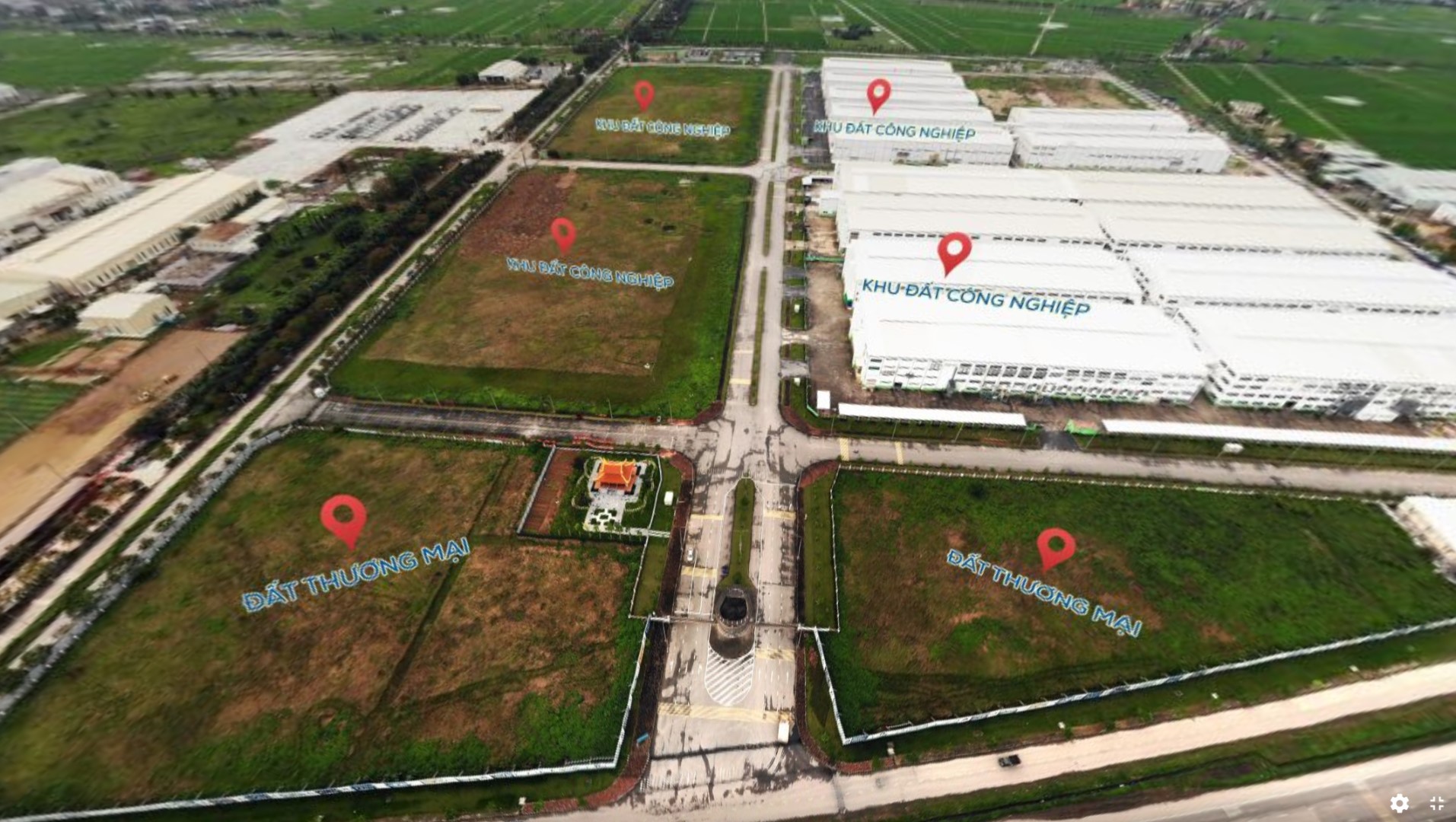
List of industrial zones in Gia Lai Province
As of now, the scale of industrial development in Gia Lai can be summarized as follows:
- Total number of operational/planned industrial parks: The province currently has 2 operational industrial parks (Tra Da Industrial Park and Tay Pleiku Industrial Park) and a number of industrial clusters that have been and are being planned for expansion to meet the demand for production space.
- Future orientation: Focus on developing industrial parks/clusters in an ecological and specialized direction, prioritizing expansion in areas near economic centers and key transportation routes (such as National Highway 19 and National Highway 14).
1.4. The role of Gia Lai in the national industrial network
- Regional positioning: Bac Ninh has established itself as a center for electronics and high technology, while Dong Nai functions as a diversified industrial hub. In contrast, Gia Lai is positioning itself as a center for agricultural and forestry processing and renewable energy development in the Central Highlands.
- High-tech agriculture: As a leading producer of industrial crops such as coffee, pepper, rubber, and a wide range of fruits and vegetables, Gia Lai plays a critical role in Vietnam’s processed agricultural export supply chain.
- Energy: The great potential for hydropower, wind power, and solar power has made Gia Lai one of the major renewable energy centers, contributing to national energy security.
1.5. Vinasc Real assesses the FDI investment potential in Gia Lai.
Based on survey data and information from its network of local collaborators, Vinasc Real assesses that Gia Lai’s potential for attracting FDI is currently in a “rising” phase:
- Practical strengths: Competitive labor costs, abundant raw materials, and a large amount of available industrial land.
- Investment opportunities: FDI investors in the food/beverage processing, building materials manufacturing, and clean energy sectors are showing particular interest in Gia Lai, aiming to leverage the agricultural supply chain and preferential energy policies.
- Recommendation: Investors should quickly seize the opportunity as logistics infrastructure (especially the connection of National Highway 19 to seaports) is being significantly upgraded. Vinasc Real is committed to providing up-to-date, accurate information and on-site surveys to support optimal investment decisions.
2. Connecting infrastructure and logistics advantages
2.1. The Main Transportation System
Transportation infrastructure is a key factor determining Gia Lai’s logistics advantage, helping the province connect effectively with economic centers and export markets.
- Road:
- National Highway 14 (Ho Chi Minh Highway): The backbone connecting Gia Lai with the Central Highlands provinces in a North-South direction (Kon Tum, Dak Lak), playing a crucial role in the transportation of goods within the region.
- National Highway 19: A vital route connecting Pleiku with Quy Nhon seaport (Binh Dinh province). This is the most important transportation route serving import and export, and is currently undergoing major upgrades to expressway standards, shortening transportation time to the seaport.
- National Highway 25: Connects Gia Lai with Phu Yen province (bordering the South Central Coast).
- Air travel:
- Pleiku Airport: Plays a crucial role in transporting passengers, experts, and high-value goods with fast transit times.
- Seaports & Railways:
- Seaports: Gia Lai does not have a direct seaport. Its logistical advantage lies in its quick access (approximately 3-4 hours of transit time) to Quy Nhon Port – one of the important deep-water seaports in Central Vietnam.
- Railways: The province currently lacks a railway line; the transportation of large volumes of goods over long distances relies primarily on road transport and port connections.
- Border crossing:
- Le Thanh International Border Gate: An important gateway for trade with Ratanakiri province (Cambodia), facilitating cross-border trade and economic development in the Vietnam-Laos-Cambodia development triangle.
2.2. Industrial Service and Utility Infrastructure
Infrastructure serving production in existing industrial parks such as Tra Da and Tay Pleiku has been comprehensively invested in, meeting the basic needs of investors:
- Electricity & Water: The national power grid and high-capacity clean water supply ensure stable provision for industrial production.
- Telecommunications: A broadband fiber optic network is in place, effectively supporting global management and connectivity.
- Environmental Management: All industrial parks have centralized wastewater treatment systems that meet standards, ensuring environmental requirements for investment projects.
- Logistics & Amenities: Logistics centers and warehouses are gradually being established, along with an increasingly complete banking system, residential areas, and social amenities surrounding Pleiku City, creating a favorable living and working environment.
2.3. Regional and Supply Chain Linkages
Gia Lai plays an important role in linking the Central Highlands region with the South Central Coast region.
- Linking Key Economic Zones: Closely connecting with the Central Vietnam key economic zone via National Highway 19, leveraging the advantages of seaports and supporting industrial centers in Binh Dinh and Phu Yen provinces.
- Training Centers: Vocational training institutions and universities that provide basic and technical human resources for processing industries and high-tech agriculture.
- Supply chain: The biggest advantage is the abundant local raw material supply , minimizing costs and supply chain risks for processing industries.
2.4. Analysis and Evaluation: Advantages and Disadvantages
Vinasc Real recognizes that Gia Lai’s infrastructure is undergoing significant improvement, creating a clear picture of both advantages and challenges:
| Advantages | Disadvantages/Challenges |
| The connection to the seaport via National Highway 19 is being upgraded, shortening the transportation time for export goods. | The distance to major consumer markets (Ho Chi Minh City, Hanoi) and major ports (Cat Lai, Hai Phong) is still considerable. |
| Low input logistics costs due to abundant local raw materials (agricultural products, timber, energy). | The lack of a railway line and highway (currently under planning) limits the transportation of large volumes. |
| There is the Le Thanh International Border Gate , which facilitates trade between Cambodia and Northeast Thailand. | The supporting industrial infrastructure is still weak, and most investors have to be self-sufficient in their supply chains. |
Vinasc Real and its team of local collaborators are committed to continuously updating the progress of the National Highway 19 upgrade and other major infrastructure projects, helping investors accurately determine the most suitable location, logistics costs, and operating time for their supply chain.
3. Population and the Labor Market
3.1. Population Size and Density
Gia Lai province has a moderate population and population density, creating favorable conditions for a stable and affordable labor supply.
- Population Size: The total population of Gia Lai is estimated at approximately 5 – 1.6 million people (latest updated figures). This is the second largest population size in the Central Highlands region.
- Population Density: Due to its large natural area, Gia Lai’s average population density is low compared to the rest of the country, at approximately 100 people/km² (much lower than major industrial provinces like Bac Ninh and Dong Nai). Population density is concentrated in Pleiku City and its surrounding districts.
- Ethnic composition: Diverse ethnic composition (Kinh, J’rai, Bahnar, etc.), creating a rich labor force, especially a large workforce from rural areas.
3.2. Workforce and Age Structure
The labor market in Gia Lai is considered young and has potential for training.
- Labor Force: The workforce aged 15-64 constitutes a significant proportion of the total population, with an estimated number of nearly 800,000 – 900,000 people .
- Population Aging Rate: Gia Lai currently maintains a young population structure , with a higher-than-average proportion of the population under 35 years old. This ensures a relatively stable and competitive supply of new labor each year.
- Skill Level: The proportion of trained workers in Gia Lai is still modest compared to major industrial centers. However, this workforce has an advantage in skills in traditional industries such as agricultural processing, mining , and high-tech agriculture .
3.3. Assessing the Advantages and Disadvantages for Investors
The labor and consumer markets in Gia Lai present both opportunities and challenges for foreign direct investment (FDI).
| Advantages | Disadvantages/Challenges |
| Competitive Labor Costs: Average wages are significantly lower compared to the Southern and Northern Key Economic Regions. | Quality and Skills: A shortage of highly skilled labor, particularly in high-tech industries, requires investors to proactively provide initial training. |
| Stable supply: A young, abundant workforce suitable for labor-intensive manufacturing industries (textiles, agricultural processing) and assembly industries (if any). | Attracting Management Talent: Difficulties in attracting and retaining management personnel and senior engineers from major cities to work in the area. |
| Potential Consumer Market: The large population size creates a significant domestic consumer market, especially for agricultural products and consumer goods. | Migration Rate: A segment of young people tend to migrate to major industrial provinces (Binh Duong, Dong Nai) in search of higher-paying opportunities. |
Vinasc Real’s conclusion: Gia Lai’s workforce is a major advantage for investors in the agricultural and forestry processing and basic manufacturing sectors due to its low costs and abundant supply. However, investors in high-tech industries need a clear strategy for training and incentive policies to build a high-quality technical workforce.
4. Investment incentive policies and legal environment of Gia Lai province
4.1. Tax and Land Lease Incentive Policies
Gia Lai benefits from investment incentives as stipulated by the Government, due to its location in an area with particularly difficult socio-economic conditions ( thuộc Region I – Investment Encouragement Zone), in addition to specific local incentives.
| Type of Offer | General Application Mechanism | Mechanism of Application in Gia Lai |
| Corporate Income Tax (CIT) | A preferential tax rate of 10% will be applied for 15 years. | Corporate income tax exemption for the first 4 years , and a 50% reduction in tax payable for the following 9 years (maximum). |
| Land lease fees | Land rent is waived throughout the basic construction period. | Land lease fees are waived for up to 15–19 years (depending on the sector and project) from the date the project becomes operational. |
| Import Tax | Import duties are waived for goods used to create fixed assets and for raw materials, supplies, and components that cannot be produced domestically, in order to implement the project. | In accordance with general regulations, support will be provided for high-tech and renewable energy projects. |
4.2. Specific Support Policies and Improvement of the Investment Environment
Besides tax incentives, Gia Lai also strives to create favorable conditions in terms of administrative procedures and resources:
- One-stop mechanism: The province is committed to implementing a “one-stop integrated” and “electronic one-stop” mechanism to minimize the time required to process administrative procedures related to investment, land, and construction.
- Support for Procedures: The Provincial Department of Planning and Investment regularly assigns staff to assist investors in completing project dossiers, especially procedures for applying for IRC (Investment Registration Certificate) and ERC (Enterprise Registration Certificate) .
- Labor Training Support: The province has a policy to support the funding of basic vocational training for local workers, helping investors reduce initial training costs.
- Information transparency: Publicly disclose land use plans, sectoral plans, and lists of projects seeking investment to increase transparency.
4.3. Key Legal Procedures When Investing in Gia Lai
When deciding to invest in an industrial park in Gia Lai, investors need to complete the following basic legal procedures:
- Decision on Investment Policy and Issuance of IRC/ERC: Submission of application and approval in principle.
- Land lease procedure: Work with the Industrial Park Management Board and land management agency to sign a land lease contract and fulfill related financial obligations.
- Construction Procedure: Obtain a building permit and fire safety design approval before commencing construction.
- Environmental Procedures: Completion and approval of the Environmental Impact Assessment (EIA) Report or Environmental Protection Plan.
Vinasc Real: Partnering from Data to Legal Matters 🤝
With a team of expert legal and investment consultants, Vinasc Real not only provides market data and field surveys but also acts as a comprehensive partner throughout the licensing process in Gia Lai:
“We have practical experience in handling IRC/ERC documents, land lease contracts, and construction permits in Gia Lai, helping investors shorten implementation time by 3-6 months and ensuring projects are launched on schedule.”
Vinasc Real affirms its ability to quickly grasp changes in the local legal environment, providing absolute peace of mind for foreign investors when choosing Gia Lai.
5. Priority sectors for attracting investment in Gia Lai province.
5.1. List of Industry Groups Encouraged for Development
Gia Lai focuses on attracting investment in sectors with high competitive advantages, based on the province’s abundant resources and sustainable development orientation:
- High-Quality Processing of Agricultural and Forestry Products:
- Deep processing of key products: Coffee , rubber , pepper , and various fruits and vegetables .
- Clean and Renewable Energy Industry:
- Wind power, solar power, small hydropower , and biomass energy production projects.
- Building Materials Industry:
- Production of new building materials, unburnt bricks, and deep processing of non-metallic minerals.
- Supporting Industries and Mechanical Engineering:
- Manufacturing components and spare parts for the high-tech agriculture and energy sectors.
- Ecotourism and High-Tech Agriculture:
- Invest in tourism resorts that reflect the cultural identity of the Central Highlands and smart agricultural models that utilize high technology.
5.2. Explaining the Reasons for Choosing a Profession
Gia Lai’s prioritization of these industries stems from its existing advantages and sustainable development strategy:
- Supply Chain: Gia Lai is a major agricultural hub of the country. Attracting the processing industry helps the province increase the added value of raw agricultural products, minimize transportation risks, and reduce dependence on the raw export market.
- Resources & Geography: The climate and topography are favorable for the development of renewable energy projects (wind, solar) with great potential, contributing to national energy goals.
- Human resources: The local workforce has experience and skills in agriculture and mining, and can be easily retrained for processing and operating basic plants.
- Strategic Orientation: Develop green, clean, and sustainable industries, avoiding resource-intensive and highly polluting industries.
5.3. In-Depth Analysis Based on Vinasc Real’s Experience
Vinasc Real recognizes the practical suitability of these industry sectors to Gia Lai’s infrastructure and resources:
| Industry Group | Assessing the Likelihood of Success | Suggested Locations/Support |
| Processing of agricultural and forestry products | Very high. Stable raw material supply, significant tax incentives. Suitable for investors seeking low operating costs and control over the supply chain. | Priority should be given to industrial parks located near raw material sources or with quick access to National Highway 19 (for example, Tra Da Industrial Park). |
| Renewable Energy | High. National energy development potential and demand are increasing. Requires large FDI capital and advanced technology. | We need in-depth legal advice on land and power purchase agreements ( PPAs ) – areas in which Vinasc Real has expertise. |
| Building Materials Industry | Medium to High. Serves the growing infrastructure development needs of the province and region. Easier to obtain permits compared to saturated southern provinces. | It is necessary to survey the location for nearby mineral resources (if any) and convenient transportation links. |
Expert Opinion: “We observe a shift of agricultural processing investors from southern provinces to Gia Lai to optimize raw material and logistics costs. Vinasc Real recommends that investors focus on advanced processing technology to maximize the benefits of preferential policies.”
6. Reference prices for land and factory rentals and investment costs.
6.1. Land Lease Price Framework and Infrastructure Costs in Gia Lai
Compared to other key economic regions (South and North), Gia Lai has much more competitive industrial land lease costs , which is a major advantage for land-intensive or large-scale production projects.
| Cost Type | Reference Price (Price excludes VAT) | Note from Vinasc Real |
| Land lease price (50-year lease term) | Approximately $35-$55 per square meter for the remainder of the lease term. | This price may vary depending on location, remaining lease term of the Industrial Park, and negotiated agreement. |
| Rental prices for ready-built factory/warehouse (RBF) | Approximately 2.5 – 3.5 USD/m²/month (excluding VAT). | The supply of ready-built factory space in Gia Lai is limited, mainly concentrated in the Tra Da Industrial Park. |
| Infrastructure Management & Maintenance Fees | Approximately 0.3 – 0.5 USD/m²/month (calculated based on the leased land area). | This includes the cost of maintaining the internal transportation system, lighting, landscaping, and general management services. |
| Water Costs | According to provincial regulations (approximately 10,000 – 15,000 VND/m³ ). | Apply according to the local industrial price list. |
| Wastewater Treatment Costs | Based on discharge volume ( 0.3 – 0.5 USD/m³ ). | Depending on the concentration of incoming pollutants and the treatment standards set by the Industrial Park Management Board. |
Note: The prices above are for reference only at the current time and may be adjusted according to market conditions and policies of the Industrial Park Management Board.
6.2. Comparison of rental prices among typical industrial parks
Currently, Gia Lai has two prominent operating industrial parks: Tra Da Industrial Park and Tay Pleiku Industrial Park . Rental prices vary slightly based on location and occupancy rate.
| Industrial zone | Featured Location | Land Lease Price Framework (50 years) | Suitable for |
| Tra Da Industrial Park | Located near Pleiku City, it has a high occupancy rate and good connectivity to National Highway 19. | Higher (45 – 55 USD/m²) | The projects require convenient access to trade, agricultural processing, and consumer goods production. |
| West Pleiku Industrial Zone | The location is more on the outskirts of Pleiku City. | More competitive (35 – 45 USD/m²) | These projects require large areas, warehousing, or basic industrial facilities. |
6.3. Competitive Advantage in Cost
The cost of land lease in Gia Lai is considered a major competitive advantage compared to other provinces in the Central Highlands and the South Central Coast region.
- Defining Initial Investment Costs: With low land lease prices, investors can determine lower initial investment costs, optimizing capital for production projects. This cost advantage is particularly attractive to investors in the agricultural processing and building materials manufacturing industries that require large land areas.
6.4. Vinasc Real: The most reliable source of industrial park price information.
“At Vinasc Real , we don’t just provide a price range for reference. Thanks to our extensive partner network and close relationships with industrial park developers in Gia Lai , we can access the most up-to-date and actual land lease prices and service costs .”
Vinasc Real is committed to supporting its customers:
- Efficiency Comparison: Provides a detailed cost comparison report between Gia Lai and neighboring provinces.
- Optimal Negotiation: Assisting in negotiating rental prices and land lease terms to ensure investors achieve the best possible cost.
7. List of industrial parks operating in Tuyen Quang Province
This list is compiled by Vinasc Real and verified through investors and local collaborators .
- VR01 Industrial Park – ABC precision plastic mold industrial park see details…
- VR01 Industrial Park – ABC precision plastic mold industrial park see details…
- VR01 Industrial Park – ABC precision plastic mold industrial park see details…
- VR01 Industrial Park – ABC precision plastic mold industrial park see details…
- VR01 Industrial Park – ABC precision plastic mold industrial park see details…
- VR01 Industrial Park – ABC precision plastic mold industrial park see details…
- VR01 Industrial Park – ABC precision plastic mold industrial park see details…
- VR01 Industrial Park – ABC precision plastic mold industrial park see details…
- VR01 Industrial Park – ABC precision plastic mold industrial park see details…
- VR01 Industrial Park – ABC precision plastic mold industrial park see details…
- VR01 Industrial Park – ABC precision plastic mold industrial park see details…
8. Industrial zones are being planned for investment and expansion in Tuyen Quang province.
Information updated by Vinasc Real from the Provincial Industrial Park Management Board and infrastructure development partners .
- VR01 Industrial Park – ABC Precision Plastic Mold Industrial Park (see details)…..
- VR01 Industrial Park – ABC Precision Plastic Mold Industrial Park (see details)…..
- VR01 Industrial Park – ABC Precision Plastic Mold Industrial Park (see details)…..
- VR01 Industrial Park – ABC Precision Plastic Mold Industrial Park (see details)…..
- VR01 Industrial Park – ABC Precision Plastic Mold Industrial Park (see details)…..
- VR01 Industrial Park – ABC Precision Plastic Mold Industrial Park (see details)…..
- VR01 Industrial Park – ABC Precision Plastic Mold Industrial Park (see details)…..
- VR01 Industrial Park – ABC Precision Plastic Mold Industrial Park (see details)…..
- VR01 Industrial Park – ABC Precision Plastic Mold Industrial Park (see details)…..
9. Analyzing strengths and weaknesses in attracting investment
An objective assessment of the advantages and challenges will help investors gain a comprehensive view, thereby enabling them to make accurate investment decisions.
9.1. Strengths in Attracting Investment
Gia Lai possesses many core advantages, making it particularly suitable for manufacturing industries focused on raw materials and cost optimization:
- Location and Strategic Connections:
- As the center of the Central Highlands region, it serves as a gateway for trade with Cambodia via the Le Thanh International Border Gate .
- Logistics infrastructure is being upgraded: The accelerated upgrading of National Highway 19, which connects directly to Quy Nhon Port, is a breakthrough factor, significantly reducing the time and cost of transporting export goods.
- Competitive Investment and Operating Costs:
- Low land lease prices: Industrial land lease prices and management fees in Gia Lai are significantly lower than in key areas, reducing initial investment costs.
- Reasonable labor costs: A young, abundant workforce with competitive average salaries.
- Abundant resources:
- The province is the “capital” of high-value industrial crops (coffee, rubber, pepper), creating a stable and abundant source of raw materials for the agricultural and forestry processing industry.
- Attractive Incentive Policy:
- Gia Lai enjoys the highest incentives under Vietnamese law (4 years of exemption and 9 years of reduction in corporate income tax, and long-term exemption and reduction of land rent) due to its location in an area with particularly difficult socio-economic conditions.
9.2 . Practical Weaknesses and Challenges
Besides its advantages, Gia Lai also faces some practical challenges that investors need to be aware of:
- Limitations on the size of industrial parks:
- Limited industrial land availability: Only two industrial parks are currently operational, and both report high occupancy rates. Cleared and leasable industrial land remains limited, especially for very large-scale projects.
- Rental prices are trending upwards: Due to increased demand and limited supply, land rental prices in existing industrial parks are showing a slight upward trend.
- Technical Infrastructure and Human Resources:
- Lack of Supporting Industries: The ecosystem of supporting industries, precision engineering, and specialized logistics is still weak, forcing investors to be more self-reliant in the supply chain.
- Technical Human Resources Quality: There is a shortage of engineers, senior managers, and highly skilled workers in the field of modern technology.
- Local Procedures:
- Procedure consistency: Although the province remains committed to administrative reform, some local investment and land licensing procedures still lack consistency. In practice, these processes move more slowly than in major industrial centers.
9.3. Vinasc Real’s Realistic Assessment
Vinasc Real always listens to feedback from existing investors and local collaborators to provide objective assessments:
resource-intensive and land-intensive investors (such as processing, energy, and construction materials). Low investment costs are an undeniable competitive advantage.”
“However, investors need a clear plan for training technical personnel and should prioritize projects located within the Tra Da Industrial Park (if they want fast logistics connections) or new industrial clusters currently being planned to ensure sufficient land availability.”
Recommendation: Investors should seek professional advice to work early with local authorities on land lease and construction procedures, minimizing the risk of delays due to inconsistent procedures.
10. Suggestions for choosing the right industrial park according to industry
Based on our experience in FDI consulting and analysis of actual infrastructure characteristics, Vinasc Real recommends selecting industrial parks in Gia Lai according to the investor’s objectives and industry specifics:
10.1 . Agricultural and Forestry Products Processing and Deep Processing Industry
This is a key industry and has the greatest advantage in Gia Lai.
- Recommendation: Tra Da Industrial Park
- Reason:
- Strategic Location: Tra Da Industrial Park is located near National Highway 19 , providing the quickest and most convenient connection to Quy Nhon Port – the main export route.
- Integrated Infrastructure: This industrial park has a high occupancy rate and complete technical infrastructure (electricity, water, wastewater treatment), ready for the installation of processing lines.
- Supply Chain Priority: Suitable for processing projects that need to optimize post-harvest transportation times for agricultural products.
10.2 . Large-Scale Building Materials & Basic Manufacturing Industry
Suitable for projects requiring large areas, low costs, and convenient local transportation.
- Recommendation: West Pleiku Industrial Park (or other new industrial clusters currently under planning).
- Reason:
- Competitive Costs: Land lease prices in the West Pleiku Industrial Park are generally more competitive than in the Tra Da Industrial Park, making it suitable for projects needing to optimize initial land costs.
- Land availability: It is easier to find larger plots of land for lease compared to Tra Da (which is almost fully occupied).
- Regional Connectivity: Located near regional transportation routes, facilitating the convenient transport of construction materials for sale in the Central Highlands provinces.
10.3 . Electronics, High-Tech & Assembly Industry
Although not a top priority sector, these projects could still consider Gia Lai to take advantage of lower labor costs and tax incentives.
- Recommendation: Tra Da Industrial Park (if a small area is required and it has airport connectivity) or other new industrial clusters near Pleiku City.
- Reason:
- Air Connectivity: Tra Da Industrial Park has an advantage in connecting with Pleiku Airport , facilitating the transportation of high-value components, experts, and managers.
- Quality workforce: Areas near Pleiku City are more likely to attract and retain managerial and technical personnel.
10.4. Assessment by Vinasc Real – Strategic Advisor
“The choice of industrial park in Gia Lai depends heavily on logistics objectives : Projects requiring quick access to seaports should prioritize Tra Da . Projects needing low costs and large areas should consider West Pleiku or new industrial clusters .”
Vinasc Real will provide detailed reports on occupancy rates, actual rental prices, and internal infrastructure conditions of each industrial park to ensure the most suitable choice for investors’ business plans and supply chains.
11. Prospects for industrial development in Gia Lai province
Assessing prospects helps investors see the long-term picture and opportunities for “leapfrogging” in Gia Lai.
11.1. Plan for Expanding New Industrial Zones/Clusters
To meet the growing investment demand, especially as existing industrial parks (Tra Da, Tay Pleiku) are gradually filling up, Gia Lai is accelerating the planning and implementation of new industrial parks and clusters:
- Industrial Park Expansion Objective: The province plans to continue expanding the scale of existing industrial parks and to plan new industrial parks in locations with transportation advantages, especially in areas near National Highway 19 and border economic zones.
- Industrial Cluster Development: Focus on developing industrial clusters in districts with abundant agricultural and forestry raw materials, aiming to create favorable conditions for small and medium-sized enterprises (SMEs) and supporting industrial projects.
- Ecological Orientation: New industrial parks/clusters are planned in the direction of green and ecological industries, prioritizing projects that use clean and energy-saving technologies.
11.2. FDI Flows by Trends and Strategic Partners
Gia Lai is gradually becoming a new destination for foreign investors, especially from Asia:
- Capital Flow Trends: FDI flows into Gia Lai are currently strongly concentrated in the renewable energy sector (wind power, solar power) and agricultural and food processing .
- Potential Partners:
- Asian investors: Investors from South Korea and Japan are seeking investment opportunities in agricultural deep processing and high-tech agriculture.
- Europe and the US: Focus on clean energy projects (reducing carbon emissions) and sustainable wood and rubber supply chains .
- New Advantage: Gia Lai’s improved connection with the logistics chain via Quy Nhon seaport will attract more export-oriented manufacturing projects that do not require highly advanced technology but are labor- and raw material-intensive.
11.3. Golden Opportunity for Early Investors
Vinasc Real believes that now is the golden time for FDI investors to “get in early” in Gia Lai:
- Cost Optimization: Early investors will have the opportunity to lease land at a lower price, before the transportation infrastructure (National Highway 19) is fully completed, which could lead to a surge in land lease costs in the future.
- Access to Raw Materials: Ensuring control over the supply chain and a stable source of raw materials at optimal costs, especially in the agricultural processing industry.
- Maximize Benefits: Take full advantage of the highest tax and land incentives offered by the Vietnamese Government before the province’s regional classification changes.
11.4. Vinasc Real Data: Understanding Future Trends
Fact-finding data: “Through our network of collaborators and meetings with local investment promotion agencies, Vinasc Real has recorded a large number of applications from wood processing and food businesses inquiring about industrial land in the last 6 months, indicating a new wave of investment is emerging in Gia Lai.”
Vinasc Real is committed to providing up-to-date information on major infrastructure projects and industrial land development plans, helping investors make strategic decisions based on the province’s future vision .
12. Contact for investment consultation and support in Gia Lai province.
Vinasc Real – Partnering with FDI investors from survey and selection to operation.
As a leading industrial real estate consulting firm, Vinasc Real is committed to providing comprehensive support to help foreign direct investment (FDI) investors optimize their investment process in Gia Lai and Vietnam.
12.1. Comprehensive support services from Vinasc Real
We offer a comprehensive range of services, ensuring your project is implemented smoothly and efficiently:
- Providing Accurate and Up-to-Date Data:
- regularly updated information and data on industrial parks and clusters in Gia Lai and nationwide .
- The report compares land rental, labor, and logistics costs between Gia Lai and neighboring provinces.
- Support for Field Surveys and Networking:
- Arrange and support field surveys at potential industrial parks in Gia Lai.
- We will work directly with the Industrial Park Investor, the Provincial Management Board, and relevant authorities to expedite the project.
- In-depth Multidisciplinary Consulting:
- Legal – Investment: Comprehensive support for procedures related to obtaining IRC/ERC (Investment/Enterprise Registration Certificate), land lease contracts, and construction permits.
- Accounting – Taxation: Consulting on tax incentive policies in Gia Lai, VAT refund procedures, and financial compliance issues.
- Human Resources: Assisting with initial recruitment, advising on local labor policies and procedures for obtaining work permits for foreign professionals.
- Nationwide and Multilingual Support Network:
- With a network of collaborators and partner companies in almost all 63 provinces and cities , Vinasc Real ensures presence in every investment hotspot.
- Our team of consultants is ready to assist investors in English , Korean, Japanese, and Chinese , eliminating language and cultural barriers.
12.2. Vinasc Real’s Commitment
We are more than just a site referral agency. Vinasc Real’s commitment is to help investors choose the right place to succeed:
“We help investors analyze risks, optimize operating costs, and translate data into strategic investment decisions, ensuring the project in Gia Lai becomes operational on schedule.”
13. Frequently Asked Questions (FAQ)
Below is a summary of key questions that FDI investors often ask when exploring investment opportunities in industrial parks in Gia Lai, along with detailed answers from Vinasc Real :
13. What are the rental prices for industrial parks in Gia Lai?
- Answer: Industrial land lease prices in Gia Lai are very competitive, ranging from approximately 35 to 55 USD/m² for the entire remaining lease term (maximum 50 years).
- Details: Specific prices will depend on location (e.g., Tra Da Industrial Park is usually more expensive than Tay Pleiku Industrial Park), remaining lease term, and negotiated agreement with the Investor. Vinasc Real provides the most detailed and up-to-date rental price reports.
13.2 . What are the land lease terms and investment registration procedures in Gia Lai?
- Land lease term: The maximum lease term is 50 years , calculated from the date the land lease decision is issued. Most operating industrial parks have long remaining lease terms, ensuring stability for the project.
- Investment registration procedure: Investors need to apply for an Investment Registration Certificate (IRC) and an Enterprise Registration Certificate (ERC) . Gia Lai applies a one-stop mechanism to shorten the processing time for applications. Vinasc Real has a legal team to support the entire licensing process.
13.3 . What corporate income tax incentives does Gia Lai province offer?
- Answer: Gia Lai enjoys the highest corporate income tax incentives according to regulations because it is located in an area with particularly difficult socio-economic conditions.
- Specifically:
- A preferential tax rate of 10% will be applied for 15 years (or for the entire project lifespan).
- Corporate income tax exemption for the first four years after generating taxable income.
- A 50% reduction in the amount of tax payable for the next 9 years (total tax exemption period is 13 years).
13. 4. Which industrial park in Gia Lai is suitable for my profession?
- For the agricultural, forestry, and food processing industry: Tra Da Industrial Park should be chosen to optimize logistics due to its close and quick connection to National Highway 19 leading to Quy Nhon Port.
- The Building Materials and Basic Mechanical Engineering industries (requiring large areas) should consider the West Pleiku Industrial Park or other new industrial clusters to take advantage of lower land lease costs and more abundant land availability.
- In-depth consultation: Vinasc Real will analyze the specific requirements of the project to provide the most accurate recommendations.
13.5 . Can Vinasc Real assist with surveying or comparing industrial parks?
- Reply: This is our core service.
- Support: Vinasc Real not only provides data but also organizes a complete package of services including field surveys in Gia Lai and arranging meetings with industrial park investors. We are committed to providing detailed industrial park comparison reports , based on more than 10 key criteria, helping investors make decisions based on real-world data.
14. Vinasc Real’s nationwide network of partners and collaborators
Vinasc Real is proud to be not only a consulting company in major economic centers, but also a connected ecosystem covering the entire country of Vietnam. The success of investors in Gia Lai and other provinces and cities is ensured by our solid network of partners and collaborators.
14.1. Extensive Network of Collaborators
We have built and developed a strong network of experts and partners, including:
- Scope: A network of collaborators and strategic partners in over 34 key provinces/cities
- Components: Our network includes:
- Reputable local industrial real estate brokerage firms .
- investment promotion organization .
- Legal, financial, and construction experts with in-depth knowledge of local processes.
14.2. The “Two-pronged” Role of the Network
This network plays a crucial role in providing information and practical support to FDI investors:
| Role | Function Description |
| Field Information Update | Local collaborators are responsible for providing real-time updates on the following: progress of land clearance, changes in land use planning, actual rental prices, and occupancy rates of each Industrial Park/Cluster. |
| Support for On-Site Surveys | We are ready to welcome and support FDI investors conducting on-site surveys in Gia Lai, providing interpreters and arranging meetings accurately and promptly. |
| Infrastructure Progress Assessment | Providing up-to-date information on the construction progress of key transportation routes helps investors accurately assess future logistics potential. |
14.3. Unique Combination Model:
Vinasc Real operates on an intelligent model, combining deep local understanding with central-level strategic analytical capabilities:
- Local Expertise: Our collaborators in Gia Lai provide factual, detailed information and quick responses, helping investors avoid local administrative hurdles.
- Central Data Aggregation: Vinasc Real aggregates and analyzes data from across the provinces, creating a comparative national picture. and provide consistent strategic recommendations, unconstrained by local perspectives.
asserts: “Thanks to this network, when you work with Vinasc Real , you not only receive information from Ho Chi Minh City, but also authentic information directly from leading experts working in Gia Lai and 33 other key provinces and cities.”
15. Why choose Vinasc Real as your investment partner in Vietnam?
| Criteria | The value that Vinasc Real brings |
| National network | We collaborate with most industrial parks and local partners in 34 provinces and cities. |
| Practical FDI experience | Over 10 years of supporting investors from Japan, Korea, the EU, and the US. |
| Reliable & Up-to-Date Data | Updates from investors, Department of Planning and Investment, Industrial Park Management Board |
| Complete solution | From surveying – land leasing – investment permit application – operation |
| Commitment to accompany | Supporting FDI throughout the project lifecycle. |
“Investors are looking for opportunities in Vietnam?
Let Vinasc Real and our team of local collaborators accompany you on your journey to effective and sustainable investment.”