


Why are industrial zones under the strongest pressure to transform in the ESG wave?
For many years, ESG (Environmental – Social – Governance) was considered an “appendix” reserved only for multinational corporations or listed companies. However, in Vietnam today, ESG is no longer just a commitment on paper. It is now directly integrated into the production layer – where real value is created and where the greatest environmental and social risks arise.
Within that entire structure, industrial parks are the points under the most intense pressure for transformation.
- ESG is no longer an option – Industrial parks are at the heart of the “Green Era”
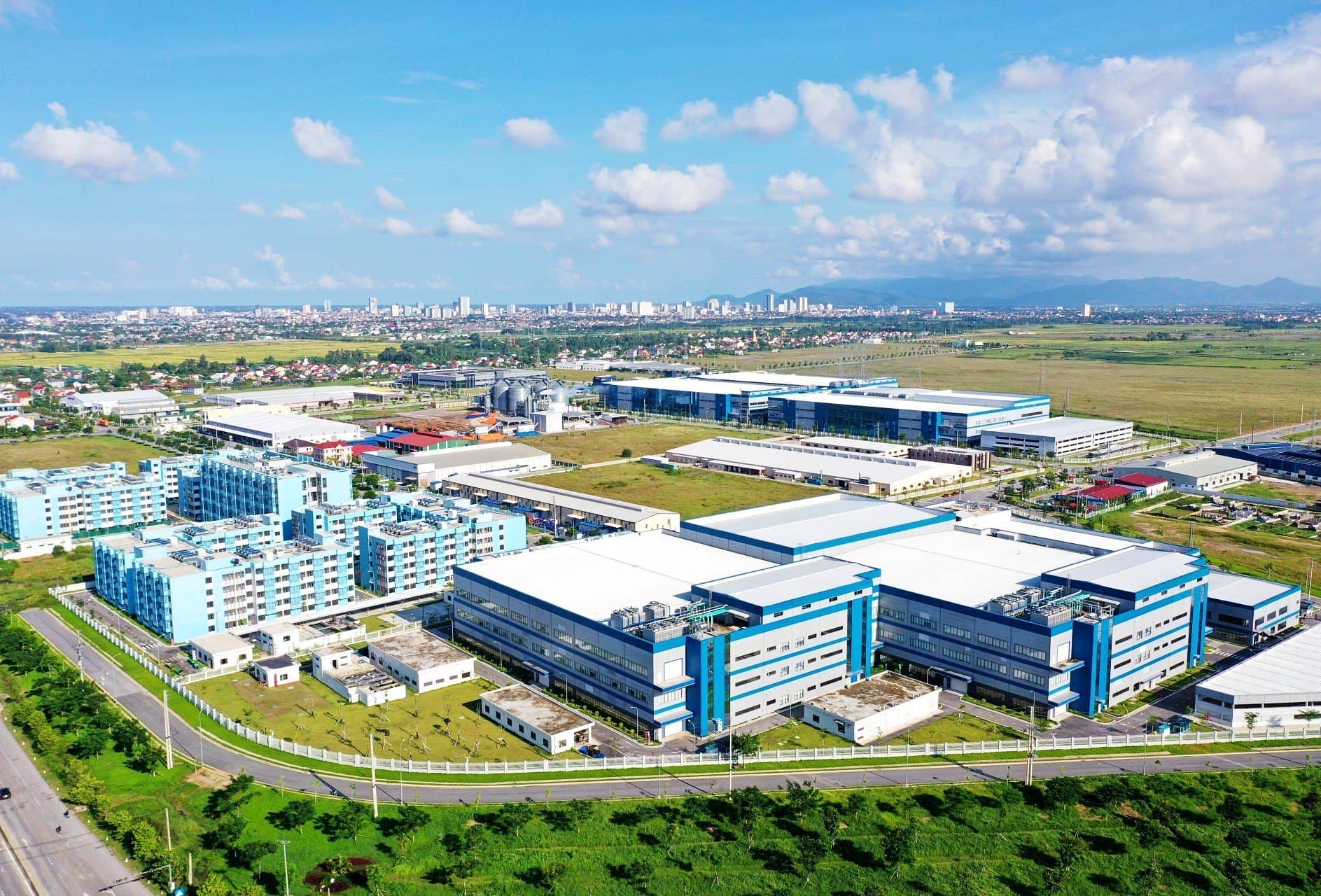
industrial zones
While previously ESG was only a requirement from the parent company to its subsidiaries, it has now become a “passport” for the entire supply chain.
Industrial parks – home to thousands of manufacturing businesses – are no longer passive infrastructures that merely “lease land and collect fees.” Currently, industrial parks are under intense scrutiny from investors, financing banks, and regulatory agencies. An industrial park that fails to meet ESG standards will directly lower the credit score of all businesses leasing land within it.
- Where is the industrial park located within the global ESG value chain?
The bottleneck of a sustainable supply chain.
ESG doesn’t evaluate individual businesses but rather the entire supply chain. A technology corporation might have a very well-structured Net Zero strategy, but if their component manufacturing plant is located in an industrial park with a poorly transparent wastewater treatment system, then the entire value chain is still considered “risky”.
In other words: A company’s products cannot be “clean” if the industrial park’s infrastructure does not meet standards.
Risk concentration points by cluster
Unlike offices or commercial buildings, industrial parks are areas with a high concentration of activities that generate emissions (wastewater, air emissions, solid waste) and employ a large workforce. A single weak link in the management chain can spread ESG risks throughout the entire cluster. This is why financial institutions now view industrial parks as independent “ESG risk units” when assessing loan eligibility.
- Three sources of pressure forcing industrial parks to transform immediately.
Pressure from the new generation of FDI investors.
The criteria for selecting industrial parks have fundamentally changed. Besides rental price and transportation location, FDI investors (especially from the EU, the US, and Japan) now focus on the following questions:
- Does the industrial park have renewable energy infrastructure (rooftop solar power)?
- Does the wastewater treatment system meet Class A standards and does it have real-time monitoring data?
- Does the industrial park support businesses in meeting the requirements of the CBAM (Cross-border Carbon Tax) mechanism?
Pressure from “Green Credit” and investment funds
For infrastructure developers, ESG determines access to capital. Banks currently prioritize disbursing “green credit” with preferential interest rates to industrial park projects with green certifications (LEED, LOTUS) or transparent ESG reports. Conversely, “brown” projects will face high capital costs and rejection from international investment funds.
Pressure from the legal framework (Decree 35)
In Vietnam, the shift towards an eco-industrial park model, as outlined in Decree 35/2022/ND-CP, has established a new standard. ESG responsibility now rests not only with secondary businesses but directly with infrastructure developers.
- How is the industrial park governance model changing?

industrial zones
To avoid being left out of the game, industrial parks are taking three crucial steps to shift their focus:
- From “Land Leasing” to “Providing Compliance Platforms”: Modern industrial parks provide readily available emissions data, clean energy infrastructure, and water recycling solutions to help tenants reduce the burden of ESG reporting.
- Selective occupancy: Instead of attracting investment at all costs, industrial parks are beginning to prioritize high-tech, low-emission industries and resolutely reject projects with a high risk of pollution. This may slow the occupancy rate in the short term but protects asset value in the long term.
- Operational digitalization: Shifting from manual management to data-driven governance. All environmental and energy consumption indicators are digitized for regular ESG measurement and reporting.
-
The risks of “being on the sidelines”
Industrial parks that do not meet ESG standards will soon face:
- Short-term risks: Difficulty attracting high-quality FDI, pressure on rental prices, prolonged land vacancy periods.
- Long-term risks: Stranded assets, future infrastructure upgrade costs will be many times higher, and they will gradually be removed from the map of sustainable industries.
Vinasc Real’s Perspective: The New Role of Consulting Firms
The industrial real estate market is clearly differentiating itself. At Vinasc Real , we believe that the role of a brokerage firm is not just to “take clients to view land”.
We act as strategic consultants, helping investors choose the right ecosystem for sustainable growth over the next 10-20 years. Understanding ESG is how we protect our clients’ capital and reputation.
Conclusion: ESG doesn’t make industrial parks look “better” in advertising brochures. ESG determines the future survival of that industrial park.