


Transfer of factory/warehouse space in an industrial park
Transferring industrial park factory space is a common transaction when businesses change their production strategy, restructure projects, or take over a factory from an existing unit within the industrial park. Unlike regular sales, industrial park factory transfers are closely tied to legal regulations regarding land lease, usage terms, and approval conditions from the management authority .
Vinasc Real ‘s service system, businesses receive comprehensive support to conduct industrial park factory transfer transactions in accordance with regulations – ensuring legal clarity and minimizing risks, especially for FDI investors.
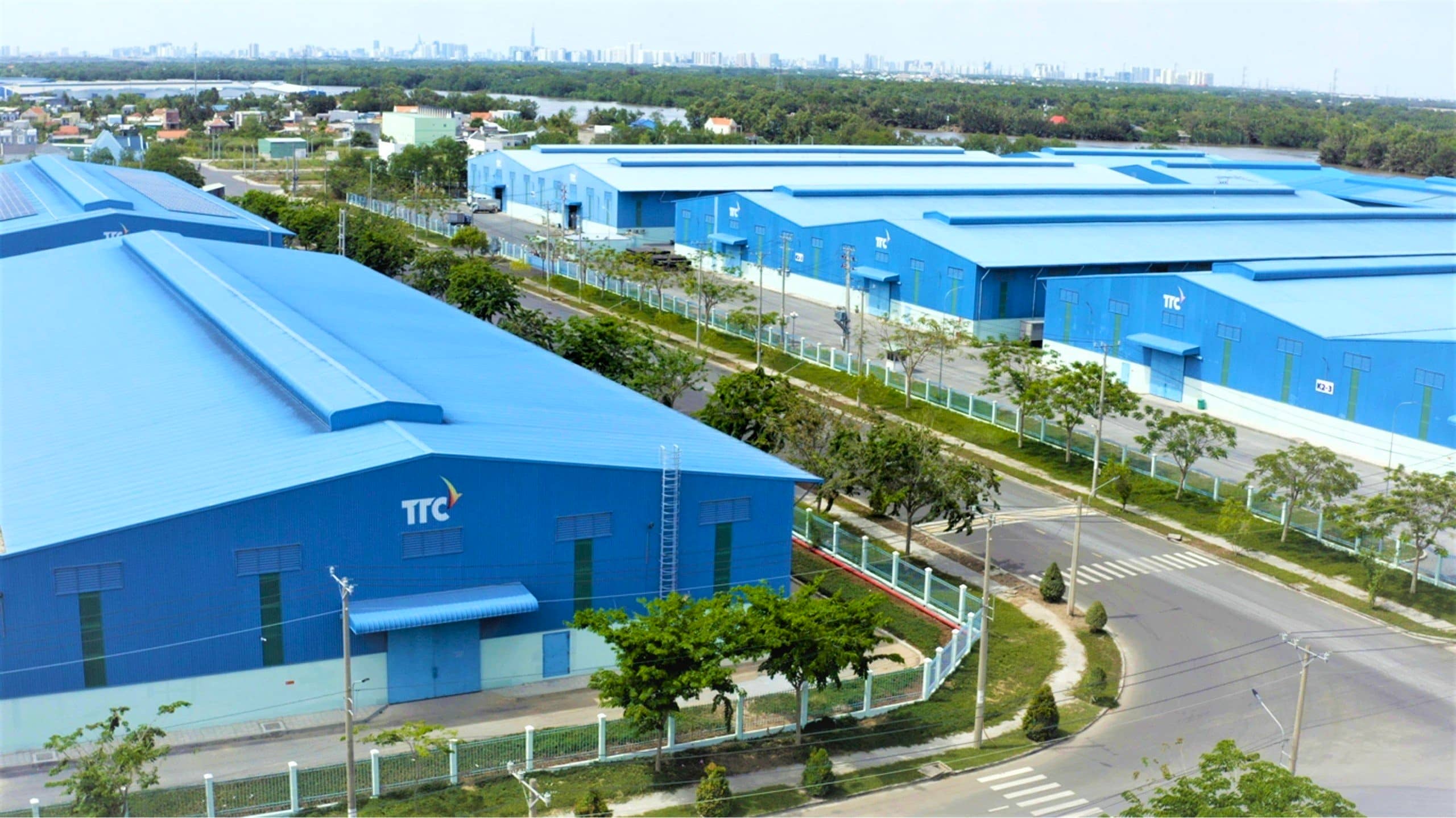
Transfer of factory/warehouse space in an industrial park – vinascreal.com
1. What is the transfer of factory space in an industrial park?
Industrial park factory transfer refers to the process by which a business currently operating a factory within an industrial park transfers ownership of the property on the land and the remaining leasehold rights to another business in accordance with the law. In other words, the transferee takes over both the factory and the land lease contract (usually a lease within the industrial park), rather than purchasing the land for permanent ownership.
1.1. Content of the transfer transaction
Industrial park factory transfer transactions typically include:
- Factory buildings and structures on the land — that is, all assets attached to the land (factories, warehouses, auxiliary structures)
- Land lease rights in the industrial park (remaining term) — the lessee continues to lease under the contract with the industrial park developer.
- Rights and obligations related to land lease contracts and industrial park infrastructure (infrastructure costs, management fees, environmental commitments).
1.2. Distinguishing between transferring ownership and buying/selling factory buildings.
- Buying/selling : This is a commercial term, commonly used for transactions between two parties in the market; in everyday language, people say “buying and selling factories/workshops”.
- Transfer : This is the correct legal term in industrial parks, emphasizing the transfer of land lease rights and assets attached to the land under a valid contract.
👉 In reality, most industrial park factory transactions are transfers, not land sales in the sense of perpetual ownership. For example: a company A in Bac Ninh province transfers a 3,000 m2 factory located in an industrial park to company B — company B receives the entire factory, with the remaining 10 years of the land lease and all related obligations (taxes, environmental fees).
2. When does a business need to transfer ownership of its factory in an industrial park?
2.1. Businesses restructure or downsize their operations.
When a business adjusts its strategy (for example, shifting to a light processing model, downsizing production, or closing a production line), factories that are no longer suitable in terms of capacity or location will be transferred to recover capital. This situation is common in domestic businesses that need to optimize operating costs or reallocate capital to other business segments.
2.2. FDI enterprises adjust their investment strategies.
Foreign direct investment (FDI) investors may reduce capital, restructure supply chains, or relocate factories to other provinces — in which case they will choose to transfer industrial park factory ownership to quickly recover capital and reduce risk. This is a common option for factories with large areas and machinery suitable for rapid takeover.
2.3. New investor takes over existing project
New investors (whether domestic or FDI) looking to expand their production capacity often seek to purchase/acquire factory space in industrial parks to shorten construction time. Acquiring existing factory space allows them to start operations quickly, taking advantage of existing infrastructure, warehousing, and convenient transportation.
3. Forms of industrial park factory transfer
3.1. Transfer of factory buildings on leased land
This is the most common form: the business transfers the entire factory along with the remaining land lease rights in the industrial park. The transferee takes over the lease contract with the industrial park developer and continues to bear the infrastructure, management, and environmental fees. The advantage is that the procedure is relatively straightforward, and the transferee can quickly put the factory into operation; common risks include a short lease term or unfavorable lease contract terms.
3.2. Transfer of projects associated with factory buildings
This form of transfer includes the transfer of assets (factories, warehouses, ancillary facilities), related rights and obligations, and sometimes even the project’s legal entity. It is often applied when the entire production-warehouse project and related contracts are sold as a whole. Advantages: transfer of the entire value chain; risks: complexity regarding debt obligations, labor contracts, and commitments with the industrial park developer.
3.3. Transfers through M&A
In M&A transactions, a factory is acquired when the buyer purchases shares or equity in the company that owns the factory. This transfer of ownership typically includes the transfer of management, personnel, and equipment. This approach is suitable when the buyer wants complete control over operations; however, thorough due diligence is necessary to avoid potential financial and legal risks.
4. Legal conditions for transferring industrial park factory ownership.
4.1. Land conditions
- The land must be legally leased within the industrial park — the lease agreement must be valid, there must be proof of land lease payment, and there must be no recorded violations.
- There are no disputes — including disputes over land use rights, disputes between the lessee and the industrial park developer, or internal business disputes related to assets on the land.
- The lease term should also align with the recipient’s investment objectives — the remaining lease term must ensure the ability to utilize the property (for example, a minimum of several years to break even, depending on the project and area).
4.2. Conditions from the industrial park developer
Many industrial parks require:
- Written consent — the industrial park developer is typically required to agree to the transfer of leasehold rights and assets attached to the land in accordance with internal regulations and the management contract.
- Comply with industrial park management regulations — including regulations on permitted industries, environment, fire safety, infrastructure fees, and regulations on land use and internal traffic.
4.3. Conditions for the acquiring enterprise
The acquiring enterprise must:
- Ensure the business activities comply with the regulations permitted within the industrial park — check the industry code, operating license, and investment registration certificate (for FDI) if necessary.
- Meeting investment conditions (especially for FDI) — including capital requirements, technology commitments, environmental impact assessment reports (if any), and approval procedures from regulatory agencies.
5. Common risks when transferring ownership of industrial park factories.
5.1. Legal risks related to leased land
The most common risks relate to land lease contracts: unfavorable clauses, breaches by previous tenants, or lease terms that are too short, preventing the project from recouping its investment . Additionally, it’s crucial to carefully verify whether the land is legally classified as industrial land, whether it’s subject to disputes, or if it’s subject to any transfer regulations within the industrial park.
5.2. Risks related to financial obligations
Accounts receivable, taxes, fees, infrastructure debts, or industrial park management costs can be “hidden costs” after a transfer. Without reviewing the books and verifying payment status (rent, service fees, electricity, water, fire safety), the transferee may incur penalties or additional payments.
5.3. Planning and Industry Risks
The factory premises may not be suitable for the industry the client intends to target (for example, the automotive or electronics industries require specific cleanliness standards or different machinery systems), or changes in the industrial park’s planning may restrict certain activities. It is necessary to check the industry code, operating conditions within the industrial park, and the feasibility of upgrading infrastructure to meet regulations.
A short checklist should be reviewed before signing:
- Carefully read the land lease agreement and confirm the remaining term.
- Check the records of outstanding taxes, fees, and infrastructure costs with the industrial park developer.
- Assess environmental permits, fire safety reports, and infrastructure acceptance status.
- Conduct a quick audit of the factory’s financial/operating costs (if possible).
- Verify the business sector, industry code, and conditions for receiving the transfer (especially for FDI enterprises).
Preventive solutions: hire an independent legal and auditing firm, require a guarantee clause in the transfer contract, and create a detailed handover record upon receiving the factory. A real-world example (anonymous): a business received a 2,500 m2 factory in an industrial park in a northern province but did not review the infrastructure management fees; after 6 months, a management debt nearly equal to 3 months’ rent arose – this situation could have been avoided if the buyer had requested confirmation of the debt before signing.
Conclusion: Before deciding to transfer or acquire a factory in an industrial park, conduct a risk assessment with an expert to minimize the possibility of financial loss and ensure long-term interests.
6. The role of brokerage firms in industrial park factory transfer transactions.
A professional industrial real estate brokerage firm acts as a bridge, helping businesses save time, reduce legal risks, and optimize transaction value. The brokerage firm not only connects buyers and sellers but also provides in-depth consulting services, appraisal, and post-transaction operational support.
- Legal review: reviewing land lease contracts, documents related to industrial land, verifying the absence of disputes, checking fire safety, environmental permits, and other necessary investment documents.
- Suitability assessment: analyzing industry codes, industrial park planning, factory area, infrastructure capacity (electricity, substations, water, internal transportation, warehouse space) to determine whether the project aligns with the recipient’s strategy.
- Coordinate with the industrial park developer: work directly to obtain transfer approval, confirm infrastructure debts, management fees, and adjust lease contracts when necessary.
- Assisting in negotiations and transaction completion: drafting guarantee clauses, participating in price/lease negotiations, assisting with contract signing and asset handover (including equipment, warehouse, and factory handover records).
Example describing brokerage services (a standard package):
- Legal due diligence & debt audit (output: legal report, risk list)
- Factory valuation and price consultation based on area and industrial park location.
- Assisting with obtaining developer approvals and working with regulatory authorities.
- Support in contract negotiation, drafting, and handover — including post-transaction consulting (accounting, tax).
As a leading industrial real estate brokerage company in Vietnam, Vinasc Real is committed to providing comprehensive services: from legal due diligence and technical assessment (machinery, power stations) to post-handover support, ensuring businesses can operate with peace of mind. Contact us for free consultation and a legal checklist before making a transfer decision.
7. Providing synchronized support for FDI enterprises when transferring factory premises.
For FDI businesses, transferring factory space in industrial parks often involves more complex investment and approval procedures due to changes in project ownership, adjustments to investment registration certificates, and permits related to specific industries. Therefore, foreign investors need a partner with expertise in legal matters, procedures, and operational practices in Vietnam.
Vinasc Real provides support in a comprehensive and specific manner:
- Consulting on suitable transfer options for FDI projects: evaluating industry codes, transfer conditions, and analyzing benefits and risks based on factory area, infrastructure capacity (electricity, substations, water), location within the industrial park, and expansion potential.
- Coordinate the handling of legal and investment-related procedures: assist in adjusting investment registration certificates, applying for approval of industrial park investors, submitting documents to management agencies (Department of Planning and Investment, Industrial Park Management Board), and monitoring the approval process until completion.
- Connecting accounting, tax, and compliance services after the transaction: introducing tax and auditing consulting firms, assisting with bookkeeping transfer, handling arising tax obligations, advising on industrial park management costs and related payables for factories and warehouses.
Basic procedures for FDI investors (for reference):
- 1–2 weeks: Preliminary assessment (due diligence, legal and technical) based on factory area and location within the industrial park.
- 2–6 weeks: Completing the application for transfer approval, and requesting adjustments to the investment registration if necessary.
- 1–3 months: Complete procedures with the industrial park developer, settle outstanding debts, sign contracts, and hand over assets.
Quick checklist for foreign investors:
- Confirm the industry code and conditions for receiving the transfer of ownership at the industrial park.
- Prepare legal documents, investment registration, and legal representative documents.
- Review fire safety records, environmental permits, and infrastructure acceptance reports.
- Confirm the payment status of rent and infrastructure management fees with the developer.
A synchronized approach helps FDI investors carry out transfers safely, quickly, and in accordance with regulations — especially important when the recipient needs to get the factory up and running soon. If you are a foreign investor considering transferring industrial park factory space to an FDI enterprise, Vinasc Real can provide detailed advice on procedures specific to your province and industrial park cluster.
8. Process for assisting with the transfer of factory/warehouse space in industrial parks at Vinasc Real
8.1. Receiving requests for transfer or acquisition of assets.
When a business contacts us, Vinasc Real will receive preliminary information: industrial park location, factory area, remaining land lease term, seller’s needs or buyer’s requirements. Timeframe: 1–3 days to verify validity and schedule a detailed assessment.
8.2. Legal review of factory buildings and leased land.
The process involves collecting documents (land lease contracts, legal entity documents, environmental permits, fire safety certificates, infrastructure acceptance reports) and conducting legal verification. Output: a legal review report listing risks and proposing solutions. Estimated time: 1–3 weeks depending on the volume of documents.
8.3. Advising on suitable transaction options
Based on the review results, Vinasc Real proposes the following options: direct transfer, project transfer, or M&A; along with a reference valuation (based on area, location, infrastructure) and estimated incidental costs (taxes, fees, debt payments). The timeframe is one week to finalize the plan and provide a consulting quote.
8.4. Support in working with industrial park investors.
Representing or coordinating with the seller to prepare documents for approval from the industrial park developer, confirming outstanding debts, management fees, and transfer conditions. Vinasc Real assists in drafting documents, monitoring progress, and negotiating necessary terms. Average time: 2–6 weeks, depending on the regulations of each industrial park.
8.5. Partnership throughout the signing and handover process
Vinasc Real assists in drafting transfer contracts, guarantee clauses, negotiating prices/rental rates, preparing equipment, warehouse, and factory handover documents; and coordinating with accounting and tax authorities to handle post-transaction financial obligations. Vinasc Real will accompany you until the handover is complete and the recipient can begin operations.
9. Frequently Asked Questions about Industrial Park Factory Transfer
9.1. Can FDI enterprises acquire factory buildings in industrial parks through transfer?
Yes. FDI enterprises can acquire factory space in industrial parks if they meet the investment conditions as stipulated (industry code, capital, technology, etc.) and are approved by the competent authorities. Typically, an amendment to the investment registration certificate is required, along with written consent from the industrial park developer.
9.2. Is a permit required for transferring ownership of a factory in an industrial park?
Yes. Most transfer transactions within industrial parks require the approval of the industrial park developer; in some cases, notification or permission from relevant state management agencies (Department of Planning and Investment, Industrial Park Management Board) is also required, depending on the regulations of each province and industrial park.
9.3. How does transferring ownership of a factory differ from purchasing one?
The main difference lies in the legal nature: transfers within industrial parks typically involve the transfer of land lease rights and assets attached to the land for the lease term; while “buying a factory” is a commercial term, sometimes misleadingly suggesting the purchase of land for perpetual ownership. Therefore, negotiations require clarification of lease rights, lease term, and commitments with the investor.
9.4. What costs should be budgeted for when acquiring a business?
The recipient should budget for: transfer fees (agreed upon by both parties), approval fees from the industrial park developer, outstanding debts (if any) related to land lease and infrastructure fees, fire safety/environmental improvement costs if needed, administrative fees, and related taxes.
9.5. How long does it typically take to complete a transfer transaction?
Depending on the complexity: if the documentation is complete and the industrial park developer processes it quickly, the transaction can be finalized within 1–3 months; cases requiring adjustments to investment licenses or complex debt settlements may take 3–6 months.
9.6. Can the factory continue to use the equipment and machinery after the transfer?
It is possible, but an inventory record, maintenance status report, and warranty responsibility transfer (if applicable) are required. Large equipment or power stations and water pumping stations need operational capacity checks and technical acceptance testing to avoid operational risks.
9.7. How to handle labor issues when receiving a transfer of ownership?
When acquiring a project that includes personnel, businesses need to review employment contracts, insurance schemes, and salary and bonus commitments; typically, both parties will work with human resources officers to complete the onboarding procedures or sign new contracts as required.
If you need detailed answers for a specific case (e.g., which industrial park province the factory is located in, its area, or fire safety/environmental conditions), please prepare the relevant information for more accurate advice.
10. Contact us for advice on transferring ownership of factory premises in industrial parks.
If you are looking to acquire a factory in an industrial park or need advice on a suitable project acquisition plan, Vinasc Real is ready to assist you as a professional industrial park real estate brokerage in Vietnam, accompanying your business throughout the entire transaction process.
Contact us now for free consultation and a complete legal checklist for property transfer :
- Hotline: +84-0971 112 118
- Email: Vinascreal@gmail.com
- Opening hours: Monday–Friday, 8:30–17:30
We offer:
- We provide consulting services for evaluating factory premises in industrial parks based on area, location, and infrastructure status (electricity, substations, water, warehouse space).
- Assistance with legal review, fire safety, environmental compliance, and debt verification before the transfer of ownership.
- Assisting with price negotiations, contract drafting, and equipment/machinery handover.
Trust signals: Vinasc Real has advised on and completed transfers for many domestic and FDI businesses; we have a legal, technical, and accounting/tax partner team ready to provide post-transaction support.
Send project information (industrial park location, area, lease term, equipment condition) via email or call the hotline to receive a response within 24 working hours.