


Land for sale in industrial zones (IZs)
In the context of many industries expanding production, selling industrial park land has become a strategic option for businesses seeking long-term production location stability. This transaction typically involves the transfer of land use rights or land lease rights within an industrial park , unlike the usual buying and selling of residential or commercial land.
Industrial park land for sale is suitable for businesses with established production scales who need space to build factories, install production lines, and expand workshops according to actual area requirements. Owning land use rights allows businesses to be more proactive in infrastructure, optimize long-term costs, and ensure supply chain stability.
Within its network of industrial real estate brokerage services in Vietnam , Vinasc Real provides information, advises on land purchase/sale options, conducts legal verification, and connects investors with suitable land plots—from small lots for factories to large land plots in areas, provinces, and cities with ready industrial infrastructure.
In this article, you will find practical guidance on: when to buy industrial park land, common transfer methods, legal considerations to check, and the process of working with a brokerage firm. If you want a quick land appraisal or free consultation, please contact us so our team of experts can assist with a survey and provide a detailed quote.
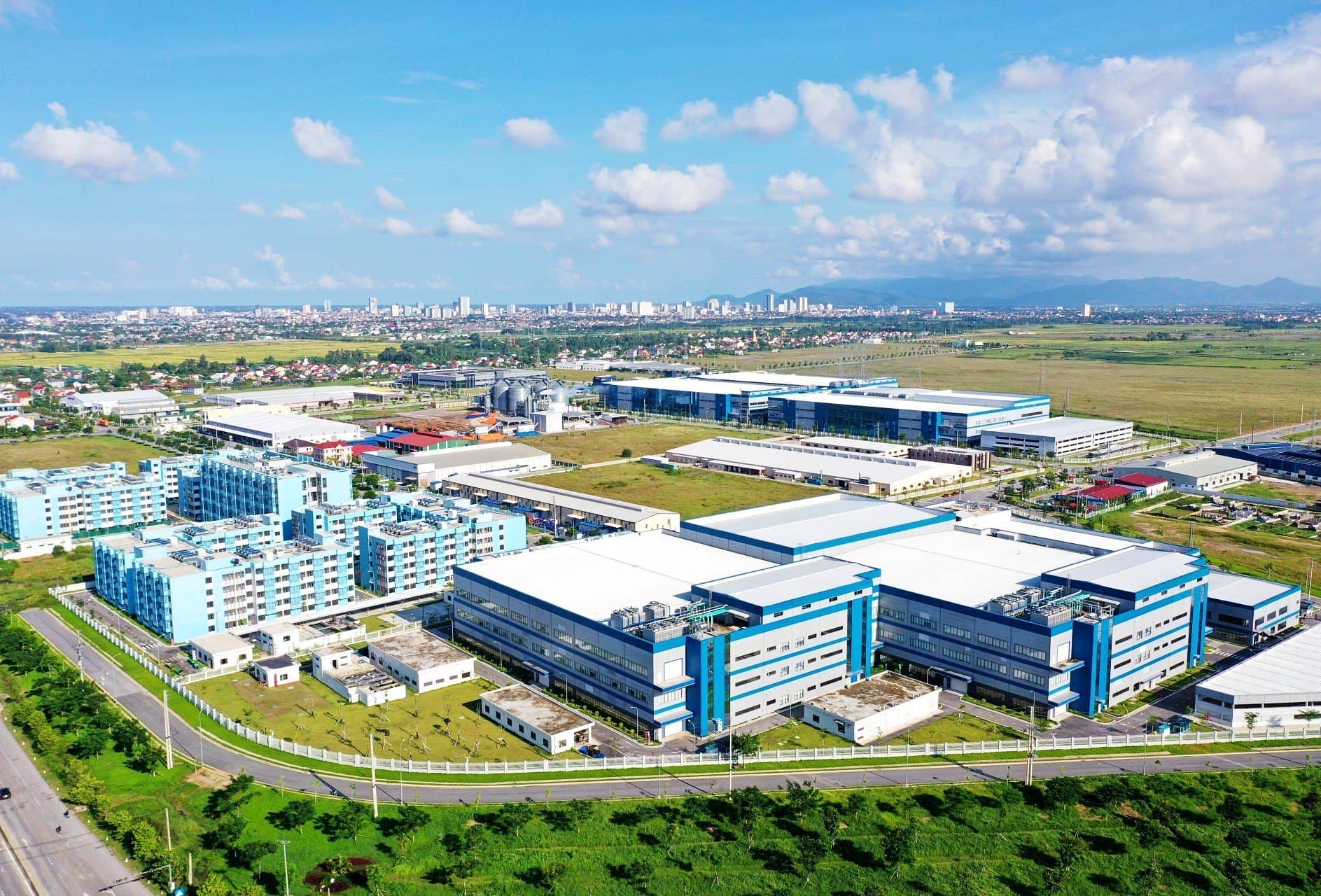
Land for sale in industrial zones (IZs) – vinascreal.com
1. What is industrial land sale?
Selling land in industrial zones differs from buying and selling residential or commercial land. Essentially, these are transactions involving the right to use land for industrial purposes within the zone, including the following common types:
- Transfer of land use rights in industrial zones — the buyer receives the land use rights as stipulated, and can build factories and production infrastructure on the purchased area.
- Transferring remaining land lease rights — instead of purchasing ownership, businesses acquire lease contracts with remaining terms, suitable for short- or medium-term projects.
- Transfer of industrial park land use rights — acquisition of all or part of a project that already has factories, infrastructure, and accompanying legal documents.
1.1. Characteristics of industrial land for sale
- Planned and licensed for industrial use: the land plot is located within the industrial park boundaries and its intended use has been confirmed by the authorities and the investor.
- The land use period is limited to the operating time of the industrial park — depending on the contract, which usually specifies the number of years of use and renewal conditions.
- This is tied to specific legal conditions and financial obligations: including financial obligations to the industrial park developer, fees, taxes, and commitments to environmental protection and factory operation.
1.2. Suitable candidates for the form of buying/selling industrial park land.
- Manufacturing businesses with long-term investment strategies need sufficiently large areas to accommodate production lines, factories, and to allow for future expansion.
- FDI businesses want to stabilize their production locations — owning or transferring the right to use the land helps reduce risks related to land availability and increases stability in the supply chain.
- Investors acquire established industrial projects or land plots — often targeting large plots with existing infrastructure, ready for lease or further development.
2. When should businesses consider buying or acquiring industrial park land?
Not every business should buy land in an industrial park. This decision should be based on investment goals, production plans, and financial capabilities. Below are some typical situations where buying or acquiring industrial park land is a reasonable choice.
2.1. The need for long-term land use rights ownership
If a business is aiming to invest in a large-scale factory with stable operations for many years, owning land use rights helps reduce the risk of site changes and stabilizes long-term costs. For example, an electronics component manufacturing plant needs a stable production line, infrastructure, and sufficient land area to optimize operations — in this case, buying industrial park land is often more reasonable than leasing.
2.2. Proactive in construction and expansion
Purchasing or acquiring industrial park land allows businesses to design their own factories, arrange production lines, and reserve space for future expansion. Instead of having to adjust to lease terms, businesses can plan the development of their production area on the land they own and invest in machinery and infrastructure that meet production standards.
2.3. Optimizing Asset Strategy
Industrial park land use rights are sometimes considered strategic assets: they can be used as collateral for loans, as equity contributions, or to retain value over time. For operating businesses needing to optimize their financial structure, transitioning from leasing factory space to owning land can increase financial security and value on the balance sheet.
Practical suggestion: If your business plans to invest in a factory in a specific province or city within 5–10 years, requires a large area (> desired factory size), or wants to manage its own infrastructure, consider purchasing/transferring ownership. Conversely, if the project is short-term or you want to test the market, leasing a factory may be a more flexible option.
If you want to know which option is best suited for your project (buy vs. rent), please provide basic information about the required area, industry, and intended location for a quick assessment and specific recommendations.
3. Common forms of selling industrial land.
3.1. Land for sale directly from the industrial park developer.
In some industrial zones, developers have policies for selling or transferring land use rights to businesses according to regulations. This form is usually legally clear and the price is announced by the developer; it is suitable if you need a clean plot of land with basic infrastructure already in place and want to avoid risks related to third parties.
For example, businesses looking for large plots of land to build factories can negotiate to buy directly from the developer, receive all necessary documents, and get support in connecting to the area’s infrastructure.
3.2. Transfer of industrial park land
Sublease is when a business currently leasing or owning land sells it to another party. This is a common practice, especially with land that already has factories and is in operation — the buyer can quickly get the factory up and running, but they need to carefully check the lease term or transfer terms.
A practical example: a manufacturing company transfers ownership of a plot of land with an operating factory; the buyer saves time completing the infrastructure but bears the risks associated with the lease term and outstanding financial obligations.
3.3. Transfer of projects associated with industrial park land.
This involves acquiring all or part of an established industrial project—including land, factory buildings, infrastructure, and legal documents. It is suitable for investors who want to take over a complete project for subleasing, expanding production, or restructuring their investment.
Advantages: Quick access to factory space of suitable size, reduced initial investment time. Disadvantages: Prices are usually higher than buying vacant lots and require careful assessment of financial reports, environmental obligations, and existing lease agreements.
4. Legal issues to consider when buying and selling industrial park land.
4.1. Land use duration
Before deciding to purchase or acquire land, businesses need to accurately check the remaining land use term on the documents. This term determines the long-term operational viability of the factory: if the term is shorter than the investment plan (e.g., a 10-20 year plan), the business should consider the risks or negotiate an extension with the investor. Note: some industrial parks have different regulations regarding land use terms, so it is necessary to compare them with the contract and land allocation decision.
4.2. Transfer conditions
Not all land plots within an industrial park are freely transferable. Verify the following conditions: whether the industrial park developer allows transfers; whether the original lease agreement includes a clause allowing transfers; and the requirements of the local authorities. Carefully checking these conditions helps avoid situations where a purchase contract has been signed but the land cannot be transferred due to legal constraints or internal conditions of the industrial park.
4.3. Financial obligations
The buyer needs to clarify all financial obligations related to the transaction: transfer price, ownership transfer fees, obligations to the industrial park developer (if any), transfer tax, and any incidental costs related to infrastructure or factory renovation. Many transactions also include maintenance costs, environmental fees, or the repayment of the previous owner’s initial investment—therefore, the total actual costs need to be calculated when making a decision.
4.4. Legal checklist to check
- Original land use rights certificate/lease contract and its appendices.
- Investment license (if the land is associated with the investment project) and approval document from the industrial park developer.
- Infrastructure acceptance report, environmental documents, and construction permit if there is an operating factory.
- Previous lease agreements, transfer agreements, and outstanding financial commitments.
- Report on the current status of the factory (usable area, condition of machinery, electrical and water systems, infrastructure).
4.5. Practical advice
If the remaining land lease term is less than 10 years (or doesn’t fit your investment lifecycle), consider: negotiating an extension, purchasing another plot of land, or leasing long-term instead of buying. Always request independent due diligence to identify potential risks. This is especially important when acquiring land with existing, operating factories — as these often involve obligations related to machinery, personnel, and existing contracts.
If needed, Vinasc Real can assist with legal verification and create a detailed checklist for each plot of land, helping you accurately estimate costs and risks before finalizing the transaction.
5. The role of brokerage firms in industrial park land sales transactions.
Industrial land sales transactions are often complex, involving numerous legal, financial, and technical procedures. A professional industrial real estate brokerage firm can help reduce risks and expedite the process by providing expert services and practical connections.
- Legal verification of land and projects — checking land use rights documents, lease agreements, investment licenses, and commitments with the industrial park developer.
- Assess the suitability of the purchase/sale option — analyze whether the land, factory, and infrastructure meet production requirements in terms of area, environment, and electricity and water systems.
- Compare the costs and conditions of different options—compare prices, renovation costs, operating costs, and financial obligations to make the most economical and suitable choice for the investor.
- Assisting in negotiations and transaction completion — drafting terms, negotiating prices, factory handover conditions, and monitoring the signing and land use rights transfer process.
For example: a manufacturing limited liability company is looking to purchase a plot of land with an operating factory in an industrial park — a brokerage firm verifies the paperwork, inspects the machinery system, assesses the factory area, and helps negotiate a reasonable price, shortening the transaction completion time compared to doing it themselves.
For businesses and investors, using brokerage services also helps access data on scarce land resources, market price information, and suitable land plots by province and city. Vinasc Real, as a leading industrial real estate brokerage company in Vietnam , provides a comprehensive service package from site surveys to legal support – helping you make quick, safe, and effective decisions.
If you have land for sale or are looking for factory space, submit your information to receive a quick assessment report and a suitable approach proposal.
6. Providing synchronized support for FDI enterprises when purchasing industrial park land.
For FDI businesses, buying or acquiring land in industrial parks is not just a real estate transaction—it often involves investment procedures, legal compliance requirements, and operational tasks after production begins. Having a partner to provide comprehensive support helps investors save time, reduce risks, and implement projects more smoothly.
Vinasc Real provides support:
- We provide consulting services on suitable industrial park land acquisition options that align with FDI project strategies and requirements for area and factory space; we compare different zones and provinces to select locations with appropriate infrastructure (electricity, water, transportation).
- Coordinate the implementation of investment and related legal procedures: assist in completing investment licensing dossiers, land transfer/land use rights procedures, and necessary documents with the industrial park investor or local management agency.
- Connecting accounting, tax, and compliance services after the transaction: introducing auditing partners, tax consultants, human resources services, and assisting in completing financial obligations related to land or operating factories.
A comprehensive approach helps investors minimize legal risks and ensures that infrastructure and operational facilities meet production requirements. For example, when a business wants to purchase land in the VSIP industrial park or other industrial parks, the consulting team will analyze feasibility based on infrastructure, land use rights, and location advantages to provide a suitable proposal.
If you are an investor looking for land or want to appraise existing land, submit your project brief (industry, desired area, preferred location) to receive free FDI consulting and an estimated timeline of key steps.
7. Process for supporting the buying and selling of industrial land at Vinasc Real
7.1. Receiving requests for buying/selling industrial park land.
We begin by gathering basic client information: type of business (buy/lease/transfer), preferred location, desired factory size, industry, and timeframe for needing the space. The output of this step is a requirements brief and a list of relevant search criteria.
7.2. Consulting and screening for suitable options
Based on the brief, the specialist will compare the options (buying directly from the developer, resale, or project acquisition) according to criteria such as cost, implementation time, and legal risks. The result includes a brief comparison report (pros & cons) and a proposal of 2–3 optimal options with estimated prices and timelines.
7.3. Legal review and field survey
This is the crucial step: checking land use rights records, lease agreements, relevant permits, and conducting an on-site survey of the factory—electricity, water, internal transportation, and infrastructure. Estimated time: 7–14 days depending on complexity. Deliverable: legal verification report + factory condition report (including photos and assessment of factory area and machinery systems if needed).
7.4. Assisting in negotiating transaction terms
We draft negotiation terms, assist in price negotiations, determine factory handover conditions, and commit to land use or transfer terms. Our goal is to minimize risks for clients and optimize transaction value.
7.5. Partnership during the signing and transfer process
After reaching an agreement, Vinasc Real assists in completing the necessary documents, monitoring contract signing, procedures for transferring land ownership/use rights, and handing over the factory in its current condition. We also support post-transaction services (connecting with renovation contractors, factory rental services for customers who wish to reuse the factory).
The above process is clearly designed to help clients understand each step and control risks. If you already have information on land or specific factory/warehouse purchase/lease requirements, submit it immediately so we can begin step 1 and provide an initial report within 48–72 hours.
8. Frequently Asked Questions about Industrial Land Sales
8.1. Are FDI enterprises allowed to purchase land in industrial zones?
Yes. FDI enterprises are permitted to acquire land use rights or land lease rights in industrial parks according to Vietnamese law, but must comply with the conditions related to the investment license and regulations of the industrial park developer. If you are a foreign investor, you should prepare your investment documents and seek advice to ensure the procedures are carried out correctly.
8.2. Is buying industrial park land different from leasing industrial park land?
Buying (or acquiring the right to use) land provides longer-term control, suitable for businesses with long-term investment plans. Leasing land is suitable for short- or medium-term projects, offering more flexibility in terms of time and fewer constraints on initial investment costs. The decision depends on the business strategy: if a stable factory site and investment in large machinery are needed, buying is usually the preferred option; if only market testing or cost reduction is required, leasing is a reasonable choice.
8.3. What are the risks of buying land in an industrial park?
Common risks include: legal issues (unclear paperwork), shorter land use terms than planned, hidden financial obligations (fees, taxes, payments to the developer), and environmental risks if the factory is already operational. Therefore, legal verification and site survey are mandatory steps before finalizing a transaction.
8.4. What does the transfer fee include?
Costs typically include the transfer price, income tax (if applicable), transfer/ownership fees, payments to the industrial park developer (if the contract includes such a clause), and costs for renovating or upgrading infrastructure and machinery for the operating factory.
8.5. How long does it take to complete the purchase and sale procedures?
Depending on the complexity of the documentation and the industrial park’s conditions, the process can take anywhere from a few weeks (for clean land plots with complete documentation) to several months (when approvals, contract adjustments, or financial obligation settlements are required). Legal verification and site surveys typically take 7–14 days, followed by negotiations and completion of the transfer procedures.
8.6. Is it possible to mortgage the land use rights of an industrial park?
It is possible, but it depends on the type of right (right of use or lease agreement) and the regulations of the industrial park developer and the management agency. In some cases, written consent from the developer or additional administrative procedures may be required to enforce the mortgage.
8.7. Can I buy industrial park land and then lease out factory space?
It is possible that many investors purchase land or factory buildings in industrial parks to lease them out. However, it is necessary to check the terms in the documents and contracts with the investor to ensure that the leasing complies with the planning regulations and does not violate commitments to the industrial park.
If your question isn’t listed above, or you need detailed information about a specific plot of land (area, price, current status), submit a request to receive a quick consultation and assessment report from our team of experts.
9. Contact us for advice on selling industrial land.
If you are looking to sell industrial park land or need advice on suitable buying and selling options, Vinasc Real is ready to partner with you as a professional industrial park real estate brokerage firm in Vietnam . We provide support from legal due diligence and site surveys to connecting investors and post-transaction services.
To receive a quick consultation (including preliminary legal review and price estimate), please submit your basic information using the form below or contact us directly:
- Hotline: +84-0971 112 118
- Email: Vinascreal@gmail.com
- Opening hours: Monday–Friday, 8:30–17:30
Consultation Offer: Submit your application within 48 hours to receive a free initial assessment report and two proposed approaches (buy or lease), along with cost and time estimates.
If you are an investor looking for factory space for rent or want to explore land options in VSIP industrial parks and other areas, our team will provide a list of suitable land plots based on your criteria (size, price, infrastructure) and assist with on-site surveys.
Contact us now to receive detailed information and initiate the due diligence process — Vinasc Real is committed to providing investors with fast, transparent, and practical support.