


Industrial park (IP) factory/warehouse rental brokerage
Industrial park (IP) factory leasing brokerage is a professional service that helps businesses quickly find, evaluate, and select suitable factory space within industrial parks, ensuring technical, legal, and production schedule requirements are met. When FDI businesses or manufacturing companies lease the right factory space from the start, they save preparation time, reduce initial operating costs, and minimize legal and technical risks during the investment phase.
With its market experience, Vinasc Real provides brokerage services that go beyond simply introducing properties; it offers in-depth consulting tailored to the specific needs of each project —from determining area and factory type to negotiating lease terms and assisting with related procedures.
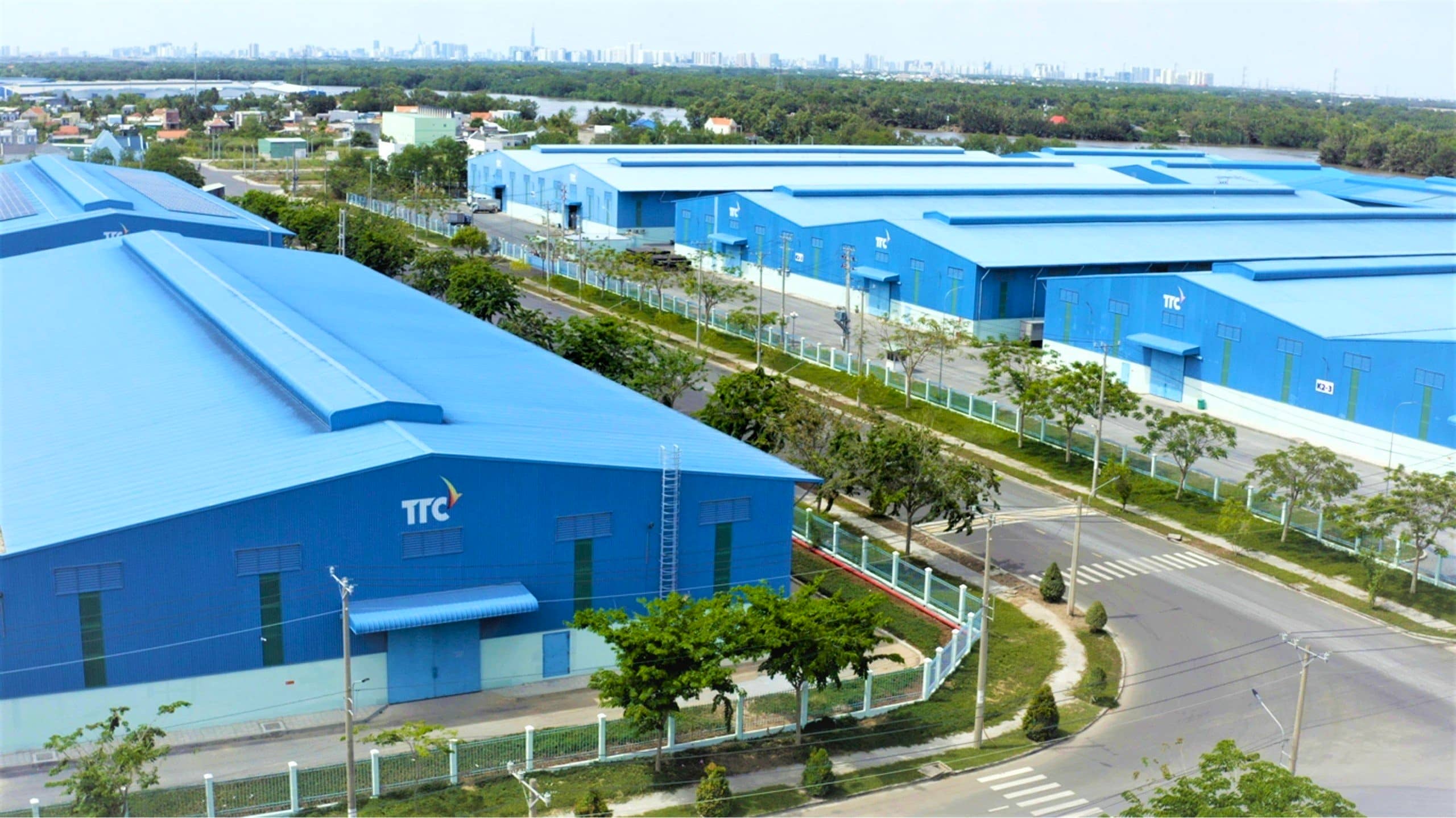
Industrial park (IP) factory/warehouse rental brokerage – vinascreal.com
1. What is a broker for leasing factory space in industrial parks?
Industrial park warehouse leasing brokers are professional intermediaries connecting the two main parties in the industrial real estate supply chain: the lessor (industrial park developer or warehouse owner) and the lessee (businesses needing to rent warehouse space for production, processing, assembly, or storage).
- Industrial park developer or factory owner
- Businesses need to rent factory space for manufacturing, processing, and assembly.
1.1. Scope of brokerage services
Modern brokerage services go beyond simply introducing properties; they encompass a range of practical tasks to help businesses quickly become operational:
- Consulting on selecting the appropriate type of factory, size, and structure for your industry.
- Assess legal conditions (licenses, intended use, planning) and fire safety documentation.
- Check technical conditions: height, floor load, electrical, water, and wastewater treatment systems.
- Negotiate lease terms, rental price, industrial park management fees, and contract duration.
- Assisting with field surveys and working with the developer to obtain permits for renovations or construction as required.
- Connecting supporting services: logistics, warehousing, accounting, tax, and compliance for businesses.
1.2. Who should use a factory/warehouse rental brokerage service?
- New FDI businesses investing in Vietnam need to rent factory space suitable for their industry.
- Businesses need to get production up and running quickly and don’t want to waste time searching for suppliers.
- Businesses that lack experience working with industrial parks need partners with expertise in legal and technical procedures.
2. Why should businesses use brokerage services for leasing factory space in industrial parks?
2.1. Save time searching
Instead of contacting multiple developers, surveying each area, and comparing numerous options, businesses can quickly access suitable choices through specialized brokerage firms. A brokerage firm with a wide network of industrial parks and a readily available database of factory properties can shorten the search time from weeks to days—helping businesses accelerate their production deployment.
2.2. Reducing legal and technical risks
Not every factory is suitable for every industry; many legal and technical risks only become apparent once the factory is operational. Professional brokerage firms help businesses inspect and avoid common problems such as:
- Not in accordance with land use planning or the lease purpose specified in the contract.
- Missing or incomplete fire safety documentation leads to delays in issuing operating permits.
- The electrical, water, and wastewater treatment systems do not meet the requirements of the production industry.
2.3. Optimizing rental costs
Brokers help businesses compare the actual total costs between different options: factory rental prices, industrial park management fees, renovation costs, as well as commercial terms (deposit, lease term, renewal terms). This allows businesses to easily choose the most financially efficient option based on their requirements for area, location, and connectivity to warehouses and logistics.
3. Types of factory/warehouse space commonly offered for lease by brokers.
3.1. Prefabricated factory buildings in industrial zones
Pre-built factory buildings are an ideal choice for businesses needing to start operations immediately. Advantages: quick lease period, low renovation costs, simple handover procedures. Disadvantages: sometimes the area or technical specifications (height, floor load capacity, electrical system) may not perfectly match industry requirements – leading to higher adjustment costs. Suitable for light manufacturing, assembly, processing industries, or businesses needing to optimize deployment time.
3.2. Factory buildings constructed to order.
Built-to-suit factories are constructed by the investor or developer according to the design and specifications provided by the lessee. Advantages: meets technical standards, fire safety systems, electricity and water supply, and production layouts according to requirements; suitable for industries with strict standards (electronics, pharmaceuticals, food). Disadvantages: longer investment time and higher initial construction/optimization costs compared to renting a ready-made factory. Typically, businesses and investors will negotiate the rental price and contract term to match the construction investment costs.
3.3. Factory and warehouse combination
This type of facility integrates small production areas and large storage warehouses within the same premises or building complex—suitable for businesses that need to simultaneously manufacture, store, package, and distribute (light logistics). Advantages: optimized flow of goods, reduced internal transportation costs, and facilitated supply chain operations. Disadvantages: potential limitations in technical zoning (e.g., wastewater treatment, different fire safety requirements between production and warehouse areas). Suitable for fast-moving consumer goods (FMCG), apparel, electronics components, and e-commerce industries.
4. Factors to consider when brokering industrial park factory rentals.
4.1. Legal aspects of the factory
- Building permit status
- Fire safety records
- Suitable for the manufacturing industry
Legal checklist to check before signing a contract (at least):
- Land use rights certificate/industrial land certificate (if applicable) or lease agreement from the investor.
- Construction permit, completion acceptance report (if it is a pre-built factory).
- Fire safety documentation: permits, acceptance reports for fire extinguishing systems, and appropriate escape routes.
- Documents proving the land use purpose, planning within the industrial park, and operational restrictions.
- Standard lease agreement between the landlord and the tenant: liability clauses, insurance, penalties for breach of contract, termination clauses.
4.2. Technical requirements
- Floor area, height, and load
- Electricity, water, and wastewater treatment systems
- Potential for renovation and expansion
Refer to the basic technical standards when evaluating a factory:
- Area and floor plan: Determine the usable area according to production and warehousing needs; measure the area in square meters based on actual usable space.
- Clear height: typically 6–12m depending on the industry; check for suitability with equipment and material flow.
- Floor load capacity: It is necessary to know the maximum load capacity (kg/m2) to avoid overloading when placing machinery.
- Electrical system: power capacity, substations, backup power sources; check grounding system and electrical safety.
- Water supply and wastewater treatment systems: assess the capacity to meet environmental standards for the manufacturing industry.
- Renovation/Expansion Potential: Check the industrial park’s master plan to determine if upgrading or adding new structures is possible.
Suggested quick reference table (write the full version when preparing the lesson): a small table comparing technical requirements by industry (e.g., apparel, food, electronics) will help businesses choose the appropriate area, height, and load capacity.
4.3. Rental conditions and costs
- Factory rental prices
- Industrial park management fees
- Lease term and renewal terms
When comparing costs between different leasing options, businesses should consider:
- Rental prices are calculated per square meter per month or per square meter per year; ask clearly if this includes management fees and infrastructure fees.
- Industrial park management fee: usually a fixed monthly fee to maintain common infrastructure (internal roads, waste disposal, security).
- Renovation costs and initial investment (if factory reconstruction or installation of specialized systems is required).
- Commercial terms: deposit amount, payment schedule, price adjustment index over time, compensation clause for early termination.
- Lease term and renewal conditions: many industrial investment projects require long-term contracts (3–10 years) to ensure production stability.
For businesses considering renting factory space, practical advice: request a detailed breakdown of costs from the landlord (price, management fees, service fees), and commission a brokerage firm to conduct a site survey to obtain an accurate estimate of renovation costs before signing the contract.
5. The role of Vinasc Real in brokering industrial park factory rentals.
As a leading industrial real estate brokerage company in Vietnam , Vinasc Real provides practical, integrated, and tenant-protected factory and warehouse leasing services. We act as an intermediary connecting businesses with industrial park developers, and are responsible for technical and legal assessments, as well as negotiating lease terms to optimize costs and timelines for businesses.
- Analyze the company’s production needs: determine the industry, capacity, area requirements, height, floor load capacity, and electrical and water system requirements to select a suitable factory.
- Screening and recommending suitable factory locations: based on a database of warehouses, pre-built factories, and build-to-suit options in various industrial parks, to generate a list of optimal solutions.
- Comparing leasing options across multiple industrial parks: analyzing rental prices, industrial park management fees, renovation costs, and commercial conditions to help businesses compare total actual costs.
- Assisting in negotiating lease terms with the landlord: negotiating price, payment terms, handover conditions, maintenance commitments, and legal clauses to protect the tenant’s rights.
Vinasc Real focuses on protecting the interests of tenants by providing transparent information, offering alternative solutions when risks arise, and providing post-contract support (monitoring handover, assisting with fire safety inspection applications, coordinating renovation contractors). If needed, we can provide short case studies of projects that have helped FDI businesses shorten lease periods and save on management costs.
6. Providing comprehensive support for FDI enterprises when leasing factory space.
For FDI businesses, leasing factory space is only one part of the overall investment project implementation process. To ensure smooth production, coordination is needed between factory selection, completion of legal procedures, and operational implementation. Vinasc Real provides comprehensive consulting and support through a one-stop shop model to minimize risks and shorten the time it takes to get your factory up and running.
Vinasc Real provides support:
- Consulting services for leasing factory space suitable for FDI projects: determining technical standards, area, type of factory (pre-built factory, custom-built factory, or combined warehouse and factory), and proposing the optimal location within the industrial park.
- Coordinate the implementation of related investment procedures: support the investment registration process, apply for construction/completion permits (if needed), confirm the suitability of business sectors with the industrial park’s planning, and support environmental/fire safety procedures.
- Connecting accounting, tax, and compliance services during the operational phase: introducing accounting and tax consulting service partners to FDI enterprises and supporting the development of compliance procedures during operation in industrial parks.
Typical support roadmap (estimated):
- Weeks 1–2: Survey needs, determine the appropriate size and type of factory/workshop.
- Weeks 2–6: Screening options, site survey, and lease term negotiation.
- February–June: Complete legal procedures, obtain building/completion permits (if needed), and begin renovation/interior design work.
- March–September: Equipment installation, fire safety inspection and acceptance, operational testing, and commencement of production.
Quick checklist for FDI businesses before leasing: investment license, industrial park industry classification confirmation, fire safety documents, wastewater treatment plan, clear lease contract regarding term and cost. If needed, Vinasc Real can provide free preliminary consultation to assess your factory leasing needs and suggest areas, sizes, and estimated costs — contact us for support.
7. The process of brokering industrial park factory rentals at Vinasc Real
7.1. Receiving requests for factory/warehouse rental
Objective: To quickly grasp the basic requirements of the business in order to create a clear brief. Output: Detailed requirements brief (industry, capacity, area, technical requirements, preferred location, budget, and desired timeline).
Contact person: A dedicated real estate agent will contact you, schedule a meeting/site, and guide you through filling out the request form (the form includes: type of factory, required rental area, height, load capacity, warehousing needs, fire safety requirements, scope of renovation if any).
7.2. Analysis of technical and industry requirements
Objective: To compare the business’s requirements with the technical standards and legal restrictions of the industrial park. Output: A preliminary analysis report listing mandatory and priority criteria (e.g., requirements for large access roads/frontage, electrical capacity, wastewater treatment system).
7.3. Screening and recommending suitable factory locations
Objective: From the database of warehouses and investors in the network, select a list of 3–7 suitable options along with an assessment of their advantages and disadvantages. Output: A quick comparison table including: industrial park location, area, height, floor load capacity, rental price, management fee, and time to become operational.
7.4. Field survey and working with the investor
Objective: To verify the factory’s current condition, measure the actual area, inspect the facade (frontage/street), electrical and plumbing systems, and fire safety conditions. Output: Survey report, actual photos, estimated renovation costs (if needed), and proposed contract adjustments before price negotiations.
7.5. Support in negotiating and signing lease agreements.
Objective: To ensure contract terms protect the lessee’s interests regarding price, term, handover conditions, and maintenance responsibilities. Output: A negotiated model lease agreement, including a payment schedule, handover commitment, and dispute resolution clauses.
Post-contracting phase (handover and renovation supervision): After signing the contract, Vinasc Real continues to support and supervise the handover process, coordinating with the investor and renovation contractor to ensure progress, fire safety inspection and handover according to standards so that the business can quickly start production.
Estimated time (for reference): Intake & analysis 1–2 weeks; screening & survey 1–4 weeks; negotiation & contract signing 2–6 weeks; renovation/fine-tuning 2–12 weeks depending on scale. These figures may vary depending on project size, industrial park, and technical requirements.
8. Frequently Asked Questions about Industrial Park Factory Rental Brokers
8.1. Should FDI enterprises use brokerage services for factory and warehouse leasing?
The short answer is: Yes. For FDI businesses, a specialized brokerage firm helps shorten the search time, reduce legal and technical risks, and optimize overall costs (rent, management fees, renovation costs). If the business is unfamiliar with the procedures in each area, a brokerage firm is a crucial support to help it start operating faster.
8.2. How does using a rental agency differ from finding a factory/warehouse yourself?
Brokerage services offer advantages such as quick access to databases of warehouses and factories in multiple industrial parks, industry-specific technical advice, price and lease condition comparisons across different zones, and contract negotiation support. Searching independently is often time-consuming and may lead to missed legal risks or additional costs.
8.3. How are brokerage service fees calculated?
Brokerage fees are usually agreed upon on a transaction basis: they may be a commission on the rental price, a fixed fee for consulting services, or a combination of both. Who pays the fee (the lessee or the investor) depends on the agreement between the parties and the practices in each industrial park; therefore, businesses should request that the brokerage firm disclose the fees in writing before signing a service contract.
8.4. What is the average time from search to operation?
The timeframe depends on the type of factory (ready-built factories are faster, built-to- ‑suit takes longer), the scale of the renovation, and legal procedures. A general estimate: ready-built factories can be operational in 4–12 weeks; built-to-suit or major renovations can take 3–9 months. Brokers can help optimize the process to shorten this time.
8.5. Does the real estate agent assist with obtaining fire safety and environmental permits?
Typically, brokerage firms assist with documentation, connect clients with specialized consultants, and coordinate with the investor on procedures such as fire safety inspections and environmental permits. However, the formal permit application process is usually handled directly by the investor or tenant in coordination with the relevant authorities; the brokerage firm plays a coordinating and professional support role.
8.6. What information do I need to prepare when contacting a brokerage firm?
Prepare as much detail as possible: industry, production capacity/plan, desired area, height/load requirements, warehousing needs, rental budget (estimated price), time to become operational, and specific requirements (fire safety, wastewater treatment, road access/truck entry). A clear brief will help the brokerage firm screen for a suitable factory more quickly.
8.7. If I want to compare the costs between different options, will the broker provide a detailed report?
Yes. Professional brokerage firms will provide a comparison table including: rental price (per square meter), industrial park management fees, estimated renovation costs, payment terms, lease term, and other potential costs — helping businesses assess the total actual costs and choose the optimal option.
8.8. How to choose a reputable brokerage firm?
Find a company with experience in industrial real estate (IPs), a proven portfolio of projects/warehouses, transparency regarding costs and processes, and the ability to provide case studies or testimonials from previous clients. Require a clear service contract with a commitment to a response timeframe and post-contract support.
If you have any specific questions about factory rentals, price comparisons, or require detailed cost breakdowns between different locations, contact our consultants for expert support.
9. Contact a real estate agent for advice on leasing factory space in industrial parks.
If you are looking for industrial park (IP) factory rental brokerage services , Vinasc Real is ready to assist you as a professional industrial park real estate brokerage firm in Vietnam , accompanying businesses throughout the project implementation process.
To receive a quick consultation and preliminary quote, please provide the following basic information when contacting us: industry, capacity scale, desired area, technical requirements (height, load capacity), preferred location (area, street frontage/main road), and expected operational start date. With this information, we can send you a suitable warehouse/factory design and an initial cost estimate.
Suggested contact channels:
- Hotline: +84-0971 112 118
- Email: Vinascreal@gmail.com
- Opening hours: Monday–Friday, 8:30–17:30
Response Commitment: Vinasc Real strives to respond within 24 business hours of receiving your request. We also support quick scheduling of on-site surveys in priority areas to provide accurate quotes for your business.
To receive a quick comparison report between options (rental price, management fees, renovation cost estimates), please send a brief or contact us directly — our team of experts will advise and recommend the optimal solution to meet your investment needs.